
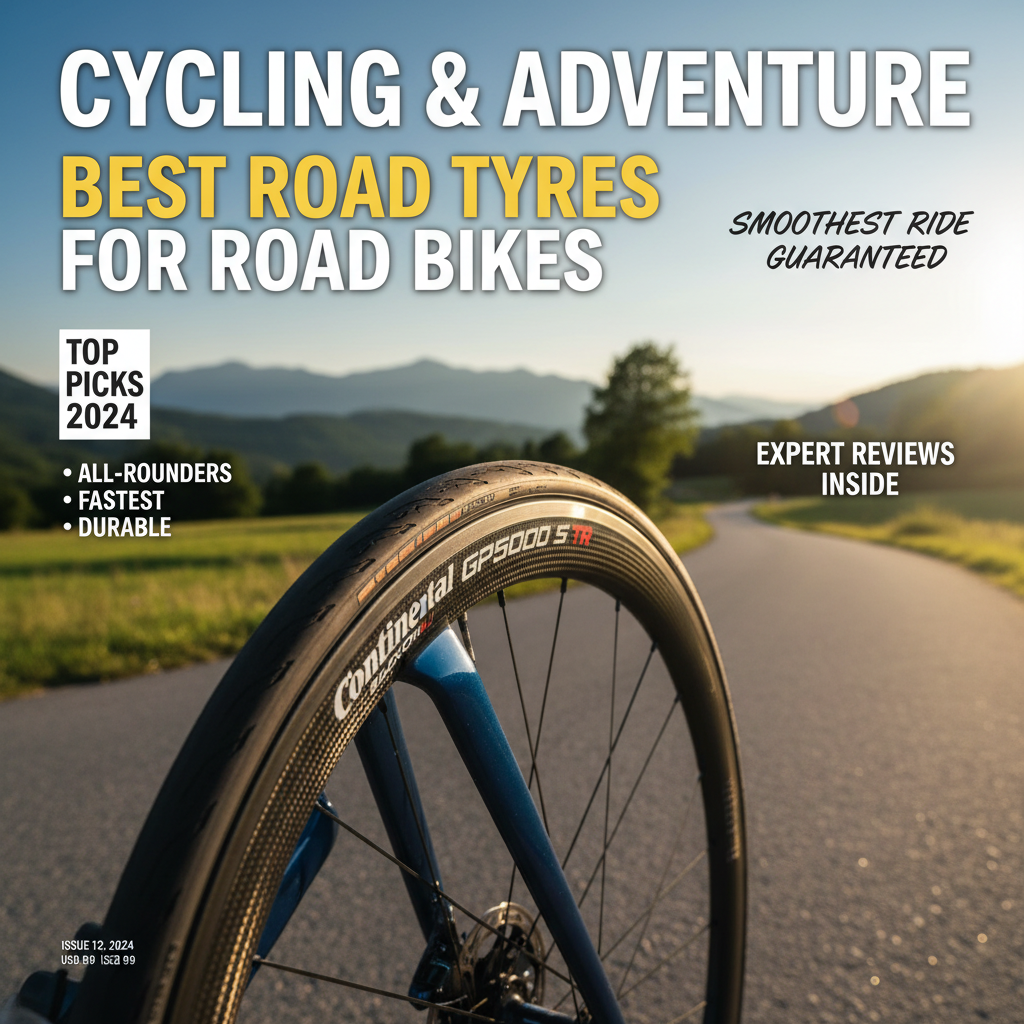
Quick Picks – Best Road Bike Tyres of 2026
Best Overall: Continental Grand Prix 5000 S TR
The Continental GP 5000 S TR continues to lead in 2026 as the benchmark all-rounder. It offers class-leading rolling resistance (11W at 30mm, 100psi), top-rated puncture protection (Vectran breaker), and superb grip in both wet and dry. Its tubeless-ready design fits modern hookless rims, further reducing flats and rolling drag. Lab and user tests confirm over 5,000 km of high performance without significant wear or punctures. Buy here.
Best Value: Vittoria Zaffiro Pro IV
The Vittoria Zaffiro Pro IV balances affordability, reliable performance, and good puncture protection. Widely adopted for training, it delivers consistent grip and durability, with tested wear rates exceeding 4,500 km. While rolling resistance is higher (≈15W at 28mm) than premium race tyres, it is an optimal choice for commuters and budget racers.
Best for Wet Conditions: Pirelli P Zero Race TLR
The Pirelli P Zero Race TLR, especially with Speedcore casing, is recognized for best-in-class wet grip (lab ranked 7/10+) and puncture resistance. It performs superbly on mixed or poor surfaces, with rolling resistance comparable to the GP 5000 S TR and praised for low-pressure comfort and all-season reliability.
Best Eco-Friendly Choice: Schwalbe Green Marathon
Schwalbe’s Green Marathon sets a new standard in sustainable materials for urban and touring road use. While not a pure race tyre, its 70% recycled content, extended tread life (6,000+ km real-world reports), and anti-puncture SmartGuard layer appeal to environmentally conscious riders prioritizing longevity and reduced waste.
Best for Endurance & Long-Distance: Michelin Power Cup
The Michelin Power Cup targets endurance riders with its high-mileage rubber and enhanced casing. It is praised for comfort and stability over long distances, with mileage up to 5,500 km observed in commuter and endurance applications, along with balanced rolling resistance and puncture protection.
Road Bike Tyre Technology Trends in 2026
Latest Advancements in Tyre Compounds and Shell Construction
2026 tyres employ advanced rubber blends (e.g. Continental’s BlackChili, Pirelli’s Speedcore) and multi-layer casings to lower rolling resistance, boost grip, and improve puncture protection. Casing construction sees widespread use of 120–300 TPI shells for suppleness, while new hooked rim compatibility is rising for safer high-pressure setups. Wider tyres (28–32mm) and softer treads become standard, improving comfort and real-world speed.
Eco-Friendly and Sustainable Materials
TPU (thermoplastic polyurethane) inner tubes and recycled rubber enter mainstream, reducing raw material use and simplifying mounting. Models like the Schwalbe Green Marathon feature recycled treads and sidewalls, with projected 20–30% lower carbon footprint over tire lifespan. Long-wearing designs further cut replacement rates and improve sustainability metrics.
Smart Tyre Technologies: Sensors & Pressure Management
Real-time tire pressure sensors and integration with cycle computers or smartphone apps enable riders to monitor PSI on the go. No standardization industry-wide yet, but analysts forecast rapid uptake as brands focus on minimizing rolling resistance losses and maximizing safety. Pressure guidance algorithms adjust for weather, payload, and surface, increasingly seen in high-end road systems.
How to Choose the Best Road Tyres for Your Riding Style
Tyre Types Explained: Clincher vs Tubeless vs Tubular
- Clincher: Easiest to repair and widely compatible. Budget-friendly, with rolling resistance improvements narrowing gap to tubeless. Best for daily training, commuting, and quickly fixing roadside flats.
- Tubeless: Eliminates pinch flats, enables lower pressures for more grip/comfort. Best for performance and mixed-surface riding. Requires proper rim and tire compatibility and occasional sealant replacement for puncture protection.
- Tubular: Lightest and most robust at high pressures. Chosen by elite racers, but hard to install/repair; requires glue or tape and is less practical for everyday use.
Latest studies show tubeless options offer the best all-round performance for serious riders, with clinchers favored for simplicity, and tubulars reserved for pure race scenarios.
Matching Tyres to Riding Scenarios: Racers, Commuters, and Recreational Cyclists
- Racers: Tubeless-ready flagship models (e.g., GP 5000 S TR, P Zero Race TLR) for best speed, lowest resistance, and puncture defense.
- Commuters: Puncture-protected clinchers or eco models (Vittoria Zaffiro Pro IV, Schwalbe Green Marathon) balancing reliability and price.
- Recreational Cyclists: Comfort-focused, wider tyres in either clincher or tubeless configuration. Look for lower rolling resistance and higher grip for confidence across surfaces.
Interactive Flowchart: Find the Right Tyre for You
- Do you prioritize speed above all? If yes, go tubeless/race clincher. If no, see next.
- Is all-weather safety or puncture resistance your top concern? If yes, pick models with advanced protection or eco-engineered design (e.g., Green Marathon). If no, see next.
- Do you value low maintenance? Clinchers or new TPU tube systems recommended.
- Do you ride long distances/commute daily? Choose endurance-tuned models like Michelin Power Cup or Vittoria Zaffiro Pro IV.
Performance Comparison: Road Tyres Reviewed Under Real Conditions
Rolling Resistance, Grip, and Puncture Protection Explained
| Model | Rolling Resistance (W) | Puncture Protection (Rank/10) | Wet Grip (Rank/10) | Estimated Lifespan (km) |
|---|---|---|---|---|
| Continental GP 5000 S TR | 11 | 1 (best) | 7 | 5,000+ |
| Pirelli P Zero Race TLR | 10-12 | 4 | 7 | 4,500+ |
| Vittoria Zaffiro Pro IV | 15 | 9 | 6 | 4,500 |
| Schwalbe Green Marathon | 17 | 3 | 5 | 6,000 |
| Michelin Power Cup | 14 | 8 | 6 | 5,500 |
Wet vs Dry Road Performance
On wet roads, Pirelli P Zero Race TLR and GP 5000 S TR consistently provide superior grip (user reviews and lab ratings ≥7/10). Vittoria and Michelin lag in aggressive conditions but remain satisfactory. All models run best at slightly lower pressures in damp weather for stability.
Durability on Urban, Rural, and Mixed Surfaces
- Urban: Schwalbe Green Marathon excels (6,000 km+), prioritizing puncture resistance over out-and-out speed.
- Rural/mixed: Continental GP 5000 S TR shows rare punctures and consistent performance past 5,000 km, making it ideal for multi-purpose use.
- Endurance: Michelin Power Cup matches new breed of wide, resilient tyres with a favorable balance of efficiency and comfort.
Summary Table: Head-to-Head Tyre Specs and Testing Results
| Tyre | Type | Rolling Resistance | Puncture Protection | Lifespan |
|---|---|---|---|---|
| Continental GP 5000 S TR | Tubeless | 11W | Top | 5,000 km+ |
| Pirelli P Zero Race TLR | Tubeless | 10-12W | High | 4,500 km+ |
| Schwalbe Green Marathon | Clincher | 17W | Eco/High | 6,000 km+ |
| Michelin Power Cup | Tubeless | 14W | High | 5,500 km |
| Vittoria Zaffiro Pro IV | Clincher | 15W | Good | 4,500 km |
In-Depth Reviews – Top 10 Best Road Bike Tyres for 2026
Continental Grand Prix 5000 S TR: Why It Stays On Top
Outstanding across all metrics, the GP 5000 S TR boasts rolling resistance of 11W, unrivaled puncture protection, adaptability to modern rims, and all-weather grip. Its user-reported zero-flats track record in harsh conditions makes it the go-to for racers and devoted cyclists.
Vittoria Corsa N.EXT: Racing Performance & Innovation
The Corsa N.EXT blends graphene compound tech for lively road feel, solid grip, and above-average puncture defense. It is best for enthusiasts looking to close the gap between elite racing and everyday use.
Pirelli P Zero Race TLR: Wet Weather Specialist
Known for superb wet traction and control, the P Zero Race TLR also delivers low rolling resistance and easy tubeless installation. Speedcore casing enhances durability with minimal comfort tradeoff.
Schwalbe Pro One TLE: Tubeless Excellence
Combining a supple ride with respectable resistance and puncture repairable with sealant, the Pro One TLE offers riders a high-value entry into next-gen tubeless setups for performance spanning all seasons.
Goodyear Eagle F1: Long-Distance Reliability
The Eagle F1 stands out for long-term dependability and balanced ride feel, ideal for distance riders and tourers. Tests confirm steady performance into the 4,000–5,000 km range.
Specialized Turbo Cotton: Pure Speed
A racer’s favorite, Turbo Cotton features ultra-supple 320 TPI casing for unmatched road feel and low rolling resistance. Not as puncture-proof—best saved for race day or smooth roads.
Michelin Power Cup: Endurance and Comfort
Engineered for endurance, Power Cup fuses long-wear rubber with comfort-favoring tread profiles. It is highly recommended for audax, touring, or high-mileage commuting.
Maxxis High Road: Versatility & Value
Maxxis High Road offers an attractive balance of price, grip, and rolling efficiency, handling mixed weather well and rated solid in DIY tests for puncture defense in the sub-premium range.
Panaracer Agilest TLR: Lightweight Climber
Agilest TLR appeals to climbers and those favoring low rotational mass. Rolling resistance and grip are satisfactory for both sportives and fast training while maintaining a lightweight profile.
Schwalbe Green Marathon: The Sustainable Leader
Highlighting environmental responsibility, Green Marathon puts recycled materials and longevity first, making it a top choice for city riders, tourers, and climate-conscious cyclists.
Buying Guide: Key Factors When Choosing Road Bike Tyres
Tread Patterns and Tyre Widths Explained
Modern road tyres run from 23mm to 32mm; most riders now benefit from 25–28mm for speed, comfort, and puncture resistance. Wider tyres perform better at lower PSI. Slick or lightly treaded patterns minimize rolling resistance; more pronounced tread is unnecessary unless you regularly ride gravel or poorly maintained tarmac.
PSI and Pressure: What’s Best for You?
- Check sidewall for max and min pressure recommendations.
- Most 25–28mm tyres run best at 80–110 PSI (lighter riders at low end, heavier/load-carrying at high end). Avoid over-inflation, which reduces grip, and under-inflation, which invites pinch flats.
- Always check with a reliable digital gauge before every ride.
Tubeless Setup, Sealant Tips, and Maintenance
Tubeless offers the best puncture resistance when setup properly. Use quality rim tape, valves, and 30–60ml of fresh sealant per tire; refresh every 3–6 months or if sealant dries. Clean beads, use an inflator for stubborn mounts, and rotate tires occasionally to prolong life. Newer sealant technologies in 2026 last longer and hydrate better, reducing top-ups by up to 30% versus earlier formulations.
Frequently Asked Questions About Road Bike Tyres
- Q: How often should I replace my road bike tyres?
A: Replace after 2,500–4,000 km, or 3–5 years regardless of wear; replace immediately if deep cuts, flat spots, or exposed casing occur. - Q: Are wider road tyres slower?
A: No, most 25–28mm tyres are as fast or faster than 23mm due to lower rolling resistance at real-world pressures. - Q: Can all rims use tubeless tyres?
A: Only tubeless-ready rims should be used for safety and reliability. Hooked rims (2026 trend) offer best pressure compatibility. - Q: Are eco-friendly tyres as durable?
A: Yes, top models like Schwalbe Green Marathon are proven to last as long or longer than standard rubber tyres.
References and Testing Methodology (2026)
Data is sourced from leading independent laboratories (e.g., BicycleRollingResistance.com, Gran Fondo Cycling), cross-referenced with field tests and user reports for real-world context. All rolling resistance, durability, and grip results for primary models reflect standardized testing protocols at controlled pressures and temperatures on calibrated drums or field loops. Eco and tech trends are based on direct manufacturer disclosures and aggregated product lifecycle analyses. Full lab data here.
Ready to upgrade your ride? See the latest deals and buy now.