
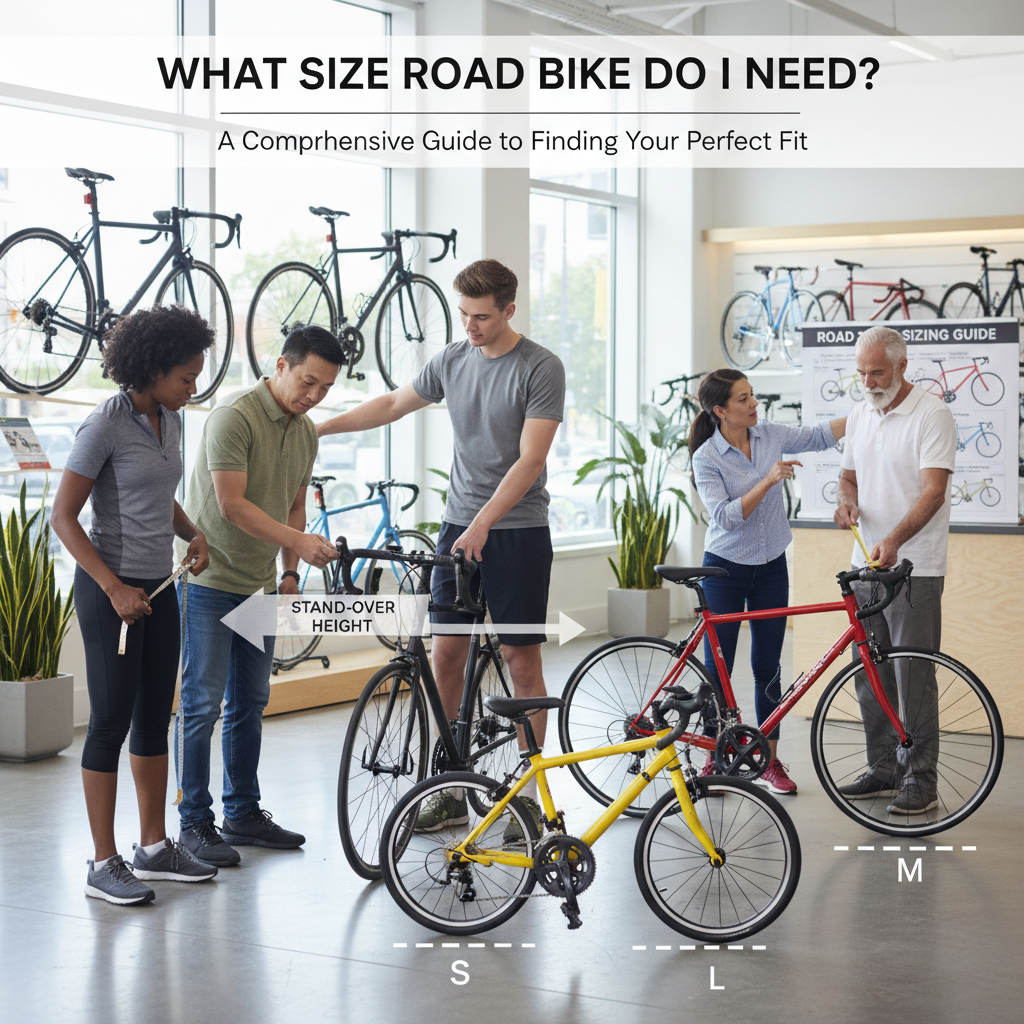
Quick Reference – 2026 Road Bike Size Chart & Calculator
Interactive Bike Size Calculator (Height & Inseam Input)
To quickly find out what size road bike you need, enter your height and inseam measurement into an online bike size calculator. This tool uses your body measurements to suggest the best frame size for most brands and models. Always double-check the results with the brand’s size chart before choosing.
2026 Road Bike Size Chart by Height and Inseam
| Rider Height (cm) | Inseam (cm) | Recommended Frame Size (cm) | Frame Size (Inches) | Typical Size (S, M, L) |
|---|---|---|---|---|
| 150-160 | 65-70 | 47-49 | 18-19 | XS/S |
| 160-170 | 70-75 | 49-52 | 19-20 | S/M |
| 170-175 | 75-80 | 52-54 | 20-21 | M |
| 175-180 | 80-85 | 54-56 | 21-22 | M/L |
| 180-188 | 85-90 | 56-58 | 22-23 | L |
| 188-196 | 90-95 | 58-61 | 23-24 | L/XL |
Use this chart as a starting point and adjust based on your flexibility, body proportions, and the bike model.
Model Year Updates: What’s New in Bike Sizing for 2026?
New bike models in 2026 offer improved size ranges, more inclusive fits for different body types, and some brands now provide extra-small and extra-large options. Pay attention to changes in geometry, like longer top tubes or shorter stems, and always check the brand’s latest sizing recommendations before purchasing.
How to Measure Yourself for a Road Bike
Step-by-Step Guide: Measuring Your Height & Inseam at Home
- Gather Materials: You’ll need a tape measure, a hardcover book, a pencil, and a flat wall.
- Measure Your Height: Stand straight against the wall with shoes off. Place the book flat on your head and gently touch the wall. Mark this point with a pencil. Measure from the floor to this mark for your height.
- Measure Your Inseam: Stand with your back against the wall and feet shoulder-width apart. Place the book between your legs and pull it up gently to your crotch, as if sitting on a bike seat. Mark the top of the book on the wall and measure from the floor up to this mark. This is your inseam.
Pro Tips for Accurate Body Measurements
- Always measure in bare feet for best accuracy.
- Ask a friend or family member to help, especially with the inseam measurement.
- Repeat each measurement twice and use the average.
Video Guide: DIY Measurement Explained
Watch easy how-to videos from trusted cycling channels to see real-life examples of measuring height and inseam for bike sizing. Search for “road bike size measurement video” on YouTube for helpful visual guides.
Understanding Road Bike Geometry and Sizing Terms
Stack, Reach, and Top Tube – What They Mean for You
Stack is the vertical distance from the center of the bottom bracket to the top of the head tube. Reach is the horizontal distance from the bottom bracket to the head tube. Top tube length measures how long the frame is from seat to handlebars. Understanding these helps you know how stretched out or upright you’ll be on the bike. More stack means a more relaxed position; more reach means a longer, sportier fit.
Types of Road Bikes: Race, Aero, Endurance, and Gravel Sizing
- Race Bikes: Shorter head tubes and longer reach for fast riding. May feel stretched out.
- Aero Bikes: Designed for speed; geometry is aggressive and often less comfortable for beginners.
- Endurance Bikes: More upright with higher stack, made for comfort on long rides. Good for most riders.
- Gravel Bikes: Similar to endurance but allow for wider tires and rougher roads. Sizing is close to endurance bikes.
Choosing the Right Road Bike Size for Your Body Type & Riding Style
Why Proportions Matter: Long Legs, Short Torso & Other Scenarios
- If you have long legs and a short torso, you may need a smaller frame or shorter top tube.
- If you have a long torso and short legs, you might need a larger size or a different stem length.
- Proportions affect comfort and reach, so compare your inseam and torso length to the manufacturer’s charts.
Adjusting for Flexibility, Experience, and Fit Preferences
- New riders often prefer a more upright fit, so consider a bike with higher stack or adjustable stem.
- If you are flexible or have experience, a lower handlebar position can improve speed and aerodynamics.
- Bike fit can always be fine-tuned with parts later, but frame size is crucial.
Women’s-Specific and Unisex Sizing Considerations
- Some brands offer women’s-specific bikes with shorter top tubes and narrower handlebars.
- Many new bikes are unisex, but check size charts to ensure a good fit for your body type.
- Adjust and test-ride different models to find what works best for you.
Step-by-Step Guide: Test-Riding and Fine-Tuning Your Fit
How to Test Ride a Bike for Fit and Comfort
- Visit a bike shop and ask to test ride several frame sizes close to your measurements.
- Check if you can stand over the frame with both feet flat on the ground (1-2 cm clearance).
- Sit on the saddle, reach for the handlebars, and make sure your elbows are slightly bent.
- Pedal and shift gears to test comfort and control. A proper fit feels natural, not cramped or over-stretched.
At-Home Bike Fit Protocol (with Visuals/Infographics)
- When at home, adjust saddle height so your leg is almost straight at the bottom of the pedal stroke.
- Check reach by placing your elbow at the nose of the saddle; your fingertips should just touch the handlebars.
- Look for online infographics as visual aids on proper seat height, handlebar position, and posture.
Signs Your Road Bike Size Is Too Big or Too Small
- Too Small: Knees hit handlebars, cramped feeling, or trouble reaching controls.
- Too Big: Can’t reach pedals or handlebars comfortably, overstretched, hard to control bike.
Brand and Model-Specific Sizing Advice (2026 Top Brands)
Trek, Specialized, Giant, Canyon – How Their Sizing Differs
- Trek: Offers a wider range of sizes and women’s-specific models (Domane, Emonda).
- Specialized: Focuses on fit adjustability and recommends shorter reach for comfort (Allez, Roubaix).
- Giant: Uses unisex sizing but some models have different geometry (Defy, TCR).
- Canyon: Sells direct-to-consumer with a detailed online fit calculator (Endurace, Ultimate).
Where to Find Brand-Specific Charts and Fit Tools
- Visit each brand’s official website for the most up-to-date size charts and calculators.
- Look for fit guides, videos, and online chat support to answer your questions.
2026 Updates: Notable Geometry Changes from Big Brands
For 2026, most big brands have made frames slightly longer or lower to improve aerodynamics. More models now come in extra-small and extra-large, helping more people find the right fit. Adjustable stems and seatposts are becoming standard for easy fine-tuning.
Advanced Fit Tips: Beyond the Basics
How to Tweak Fit with Stems, Saddles, and Handlebars
- Change the stem length (longer or shorter) to adjust reach.
- Move the saddle forward or backward for comfort and power.
- Swap handlebars for wider or narrower options as needed.
Sizing for Aerodynamics vs. Endurance
- Aero Position: Smaller frames and lower handlebars for speed.
- Endurance Position: Slightly larger frames, raised handlebars, more comfort.
- Decide based on your riding goals—fast race, all-day comfort, or adventure riding.
Sizing for New Categories: Gravel & All-Road Bikes
- Gravel bikes tend to be sized like endurance bikes but may feel higher due to wider tires.
- All-road bikes blend speed and comfort—follow brand-specific charts for best results.
Real Rider Stories: How I Chose My Road Bike Size
Case Study: Choosing for a Non-Average Body Shape
Emma is 165 cm tall but has a long inseam. She found that bikes with shorter top tubes fit best. She tried several models, adjusted the saddle and stem, and got the perfect fit with a size S endurance bike.
Case Study: Upgrading from Entry-Level to Pro Road Bike
Luca started with a basic M-size bike at age 15, then upgraded to an endurance model when he grew. He chose a frame with an adjustable seat post and easily moved up to a larger size, keeping riding comfortable as he improved.
Mistakes to Avoid – Lessons from Riders in 2026
- Don’t buy only by height—measure your inseam and check brand fit.
- Never choose a bike that’s “almost” your size, hoping to adjust everything later.
- Always test ride before buying, if possible.
Road Bike Sizing FAQ (2026 Edition)
What if I’m Between Sizes?
If you are between sizes, choose the smaller one for a more agile ride, or the larger for a more stable, relaxed feel. Adjust seat and stem as needed for comfort.
Can I Adjust a Poor Fit?
You can fix minor size issues with different stems, handlebars, or saddle position. Major size problems (frame too long or short) are harder to fix—always try to get the right frame size first.
Should I Trust Online Charts or Visit a Shop?
Charts are helpful, but a bike shop visit is best for a perfect fit. Pros can adjust your bike and offer test rides. Use charts as a guide, not the final word.
Resources & Next Steps
Where to Get a Professional Bike Fitting (2026 Updates)
- Many bike shops now offer 3D scanning and digital analysis for quick, accurate bike fitting.
- Check major retailers for professional fitting sessions before buying your new road bike.
Recommended Bike Shops, Fit Studios & Further Reading
- Local bike stores often have expert fitters to help you try sizes and models.
- Fit studios provide detailed data to match bikes to your exact body shape.
- Read guides like “2026 Bike Fit Basics” for more in-depth advice.
Downloadable 2026 Bike Sizing Checklist and Worksheet
- Look online for a free checklist: “2026 Road Bike Sizing Worksheet.”
- Print or use digitally to record your measurements, test rides, and brand size advice.