
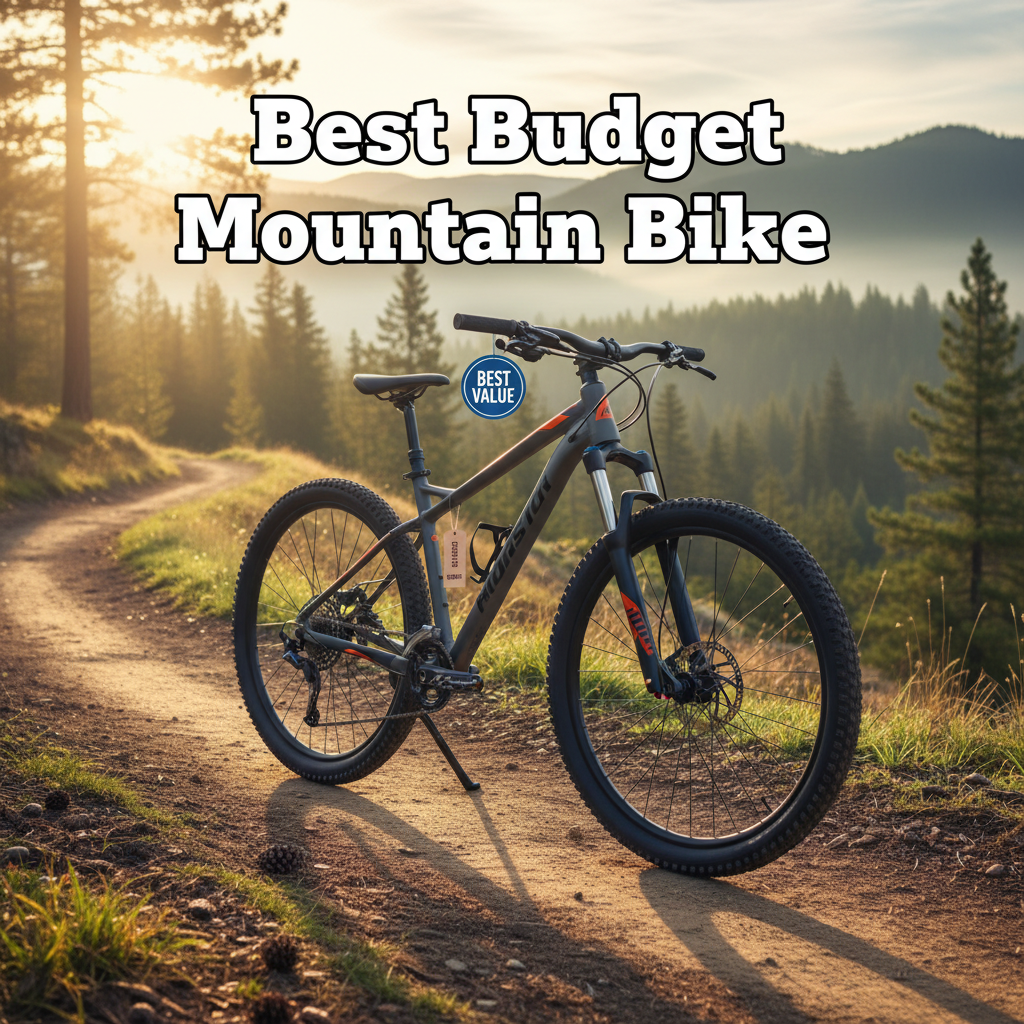
Quick Picks – Top 3 Budget Mountain Bikes for Every Rider in 2024
Best Overall Value Mountain Bike
Cannondale Habit HT 2 ($1,299): This hardtail offers a 130mm front suspension, sturdy 29-inch wheels, and a dropper post. Riders praise its agile trail handling, modern geometry, and upgrade potential. It performs well in both climbing and moderate descents and is an outstanding choice for those seeking top value in a do-it-all trail bike (buy here).
Best Budget Mountain Bike for Beginners
Co-op Cycles DRT 1.1 (approx. $1,000): Targeted at newcomers, this model delivers confidence-inspiring stability and reliable entry-level componentry. Its alloy frame and user-friendly geometry are perfect for basic trail riding, and it enables skill progression without breaking the bank (buy here).
Best Budget Full-Suspension Mountain Bike
Polygon Siskiu D6 ($1,199): Recognized for full-suspension value, the D6 combines robust trail geometry and reliable components. It stands out for comfort and handling on technical descents at a price rarely seen for dual suspension bikes. It’s a leading pick for riders prioritizing comfort on rough trails (buy here).
What’s New in 2024 Budget Mountain Bikes?
Updated Frame Technologies and Geometries
2024 budget bikes utilize lightweight 6061-T6 aluminum alloy, often borrowed from higher-end models. Modern trail geometry features longer reach, slacker head angles (now common at 65–67°), and steeper seat tubes for better climbing. Examples include the Vitus Nucleus VR ($1,199) and Polygon Siskiu D6, both providing efficiency and agility usually found on pricier bikes.
Hardtails remain prevalent under $1,500, focusing resources on better frame design and front suspension for maximum ride quality.
Innovations in Drivetrain and Braking Systems
Drivetrains have improved, with 1×10–12 speed setups (commonly Shimano Deore or SRAM SX) becoming standard. This provides a wide gear range for mixed terrain. Hydraulic disc brakes now dominate for reliable stopping—even budget models like the Trek Roscoe 6 and Marin Bobcat Trail 5 receive these upgrades. Suspension is often a budget RockShox or SR Suntour model with 120–140mm travel, tuned for real trail use.
New Brands and Under-the-Radar Options
While traditional brands (Cannondale, Marin, Kona) provide consistent quality, upstarts like Ari (Cascade Peak Elite) and the direct-to-consumer Polygon continue to shake up value, often with geometry and specs rivaling mid-tier models. Under-the-radar gems like the Marin Pine Mountain 1 offer adventure features for bikepacking and mixed terrain.
How We Selected and Tested the Best Budget Mountain Bikes
Testing Criteria: Real-World Rider Feedback
Bikes are evaluated through hands-on riding on singletrack, rocky terrain, hills, and flow trails. Criteria include climbing efficiency, descending stability, component durability, and fun factor. Climbing is judged on traction and suspension support, while descending looks at geometry, tire grip, and control at speed (target range: 100–140mm travel, 27.5”–29” wheels).
Value-for-Money Assessment Beyond Specs
Riders compare each model’s trail capability with its retail price, prioritizing bikes that require minimal upgrades yet allow room for improvement (e.g., brakes, dropper posts). Value is measured by real-world ride experience and upgrade cost-effectiveness, not just component lists.
Trail Conditions and Terrain Diversity
Testing includes fast singletrack, roots, rocks, and technical lines, as well as climbs over 10% grade and descents with drops and berms. Feedback covers bike versatility—from mellow paths for beginners to rowdier, technical blacks for more skilled riders.
In-Depth Reviews: Best Budget Mountain Bikes of 2024
Model 1: Cannondale Habit HT 2 – Real Rider Impressions & Performance
Praised for its 130mm RockShox Judy fork, 29” x 2.5”/2.4” tires, and trail geometry, the Habit HT 2 climbs confidently and is forgiving on descents. At approximately 30 lbs, it’s light for the category. Riders highlight comfortable positioning and upgrade potential (dropper post, drivetrain).
Model 2: Polygon Siskiu D6 – Comfort and Component Breakdown
This full-suspension bike delivers approximately 135–140mm travel, with reviewers noting plush rear suspension and effective front-end stability. Aluminum frame and 1×11/12 drivetrain ensure reliable shifting and braking. Riders find the D6 competitive on moderate to technical trails, especially given its sub-$1,200 price.
Model 3: Co-op Cycles DRT 1.1 – Best for Technical Trails
The DRT 1.1 features a durable alloy frame, front suspension, and wide tires for comfort. Rider feedback emphasizes its docile handling and reliable braking—perfect for rougher entry-level trails and skill development. Estimated weight is a manageable 29 lbs, with 1×11/12 gearing common for versatility.
Model 4: Marin Pine Mountain 1 – Upgrades, Pros & Cons
This steel hardtail is built for adventure, featuring numerous packing mounts and 120mm front travel. Riders love the comfort and geometry for climbs and all-day rides; however, it lacks a dropper post and is less capable on technical descents than rivals. Approximate specs: 29 x 2.6” tires, 1×11 Shimano, 32 lbs. Upgrading the fork and adding a dropper are recommended for performance-focused users.
Model 5: Kona Big Honzo – Unique Features & Who It Suits
The Big Honzo (typically $999–$1,299) is known for aggressive geometry (66.5° head angle), air fork (130mm), and trail-ready Shimano Deore components. It excels on technical singletrack and descents, making it ideal for those wanting more than a standard XC setup. Dropper post is available on higher trims; weight is approx. 29 lbs.
Side-by-Side Comparison Table: Specs & Real-World Ratings
| Model | Price | Suspension | Frame Material | Gear Range | Weight | Tire Clearance | Rider Ratings/Notes |
|---|---|---|---|---|---|---|---|
| Cannondale Habit HT 2 | $1,299 | Hardtail, 130mm front | Aluminum | 1×10 | ~30 lbs | 29 x 2.5/2.4 in. | Top hardtail pick; reliable starter and upgradable trail machine |
| Polygon Siskiu D6 | $1,199 | Full suspension (~135–140mm) | Aluminum | 1×11/12 (est.) | ~32 lbs | Not specified | Best full-suspension value below $1,500 |
| Co-op Cycles DRT 1.1 | ~$1,000 | Hardtail, ~120mm front | Aluminum | 1×11/12 (est.) | ~29 lbs | 29 x 2.4–2.6 in. | Ideal for new riders on rougher trails |
| Marin Pine Mountain 1 | $1,499 | Hardtail, 120mm front | Steel | 1×11 | ~32 lbs | 29 x 2.6 in. | Best for bikepacking, comfortable, needs dropper for tech |
| Kona Big Honzo | $1,299 | Hardtail, 130mm front | Aluminum/Steel | 1×11 (Shimano Deore) | ~29 lbs | 29 in. | Modern geometry excels on singletrack descents |
Choosing the Right Budget Mountain Bike for Your Needs
Hardtail vs Full Suspension: Which Is Better for You?
| Aspect | Hardtail | Full Suspension |
|---|---|---|
| Price Range | $950–$1,500 | $2,000–$2,500 |
| Travel | 100–130mm (front) | 130–140mm (front/rear) |
| Pros | Lighter (~30 lbs), efficient climbing, low maintenance, agile for XC/beginners | Superior comfort on descents, more control on rough terrain |
| Cons | Less comfort on technical trails, limited on descents | Heavier (35–36 lbs), less nimble uphill |
| Best For | XC, moderate trails, budget-conscious | Technical/rowdy trail riders |
Choose a hardtail for fitness, efficient climbing, and easier maintenance. Go full-suspension for technical trails and descending comfort if your budget allows.
Sizing, Fit, and Adaptability Tips
- Frame Size: Choose based on inseam and reach. Ensure 2-4” standover clearance for safe handling.
- Wheel Size: 27.5” for agility, 29” for speed and rollover—pick based on your height and terrain.
- Upgrade Potential: Focus on models with modern geometry and internal routing. Prioritize frame quality; wheels, fork, and brakes can be upgraded as needed.
- Test Rides: Try multiple sizes, especially from brands with wide in-store dealer support (e.g., Trek, Marin).
Riders’ Top Value Tips to Maximize Your Budget
- Consider used/demo models or special offer sales—significant savings vs. MSRP.
- Avoid overbuying; 120–130mm travel is enough for most trail riding under $1,500.
- Look for models with dropper posts included for immediate trail adaptability.
- Prioritize bikes with strong frames and trail geometry over premium drivetrains or flashy components.
- Shop at reputable retailers with solid after-sales support.
Frequently Asked Questions About Budget Mountain Bikes in 2024
- What defines a budget mountain bike? Typically priced $950–$2,500, these bikes have alloy frames, 100–140mm suspension, and 27.5” or 29” wheels. Top picks pair solid frames with efficient drivetrain and brakes at a reasonable price.
- Are budget mountain bikes reliable for regular trail use? Yes—modern aluminum frames, well-designed suspension, and proven drivetrains ensure 3–5 years of reliable use, especially when maintained.
- What upgrades are worthwhile? Focus on drivetrain (e.g., better shifting components), fork (for smoother suspension), and tubeless wheels/tires. A dropper post is vital for trail versatility if not included.
- Are these bikes safe for trail beginners? Absolutely. Hydraulic brakes, wide tires, and laid-back geometry provide safety and control for new and progressing riders.
- Hardtail or full-suspension for budget buyers? Hardtails are best for budgets under $1,500, excelling at XC and moderate trails. Full-suspension models over $2,000 offer more comfort but add complexity and cost.
- How do I ensure long-term value? Select modern frames from reputable brands, verify warranty and upgrade compatibility, and look for models with geometry updates for better fit and control.
Ready to ride? Explore reputable buys from sources like REI, local bike shops, or direct orders from Polygon and Ari. Prioritize fit and frame quality, and enjoy the mountain trails without overspending!