
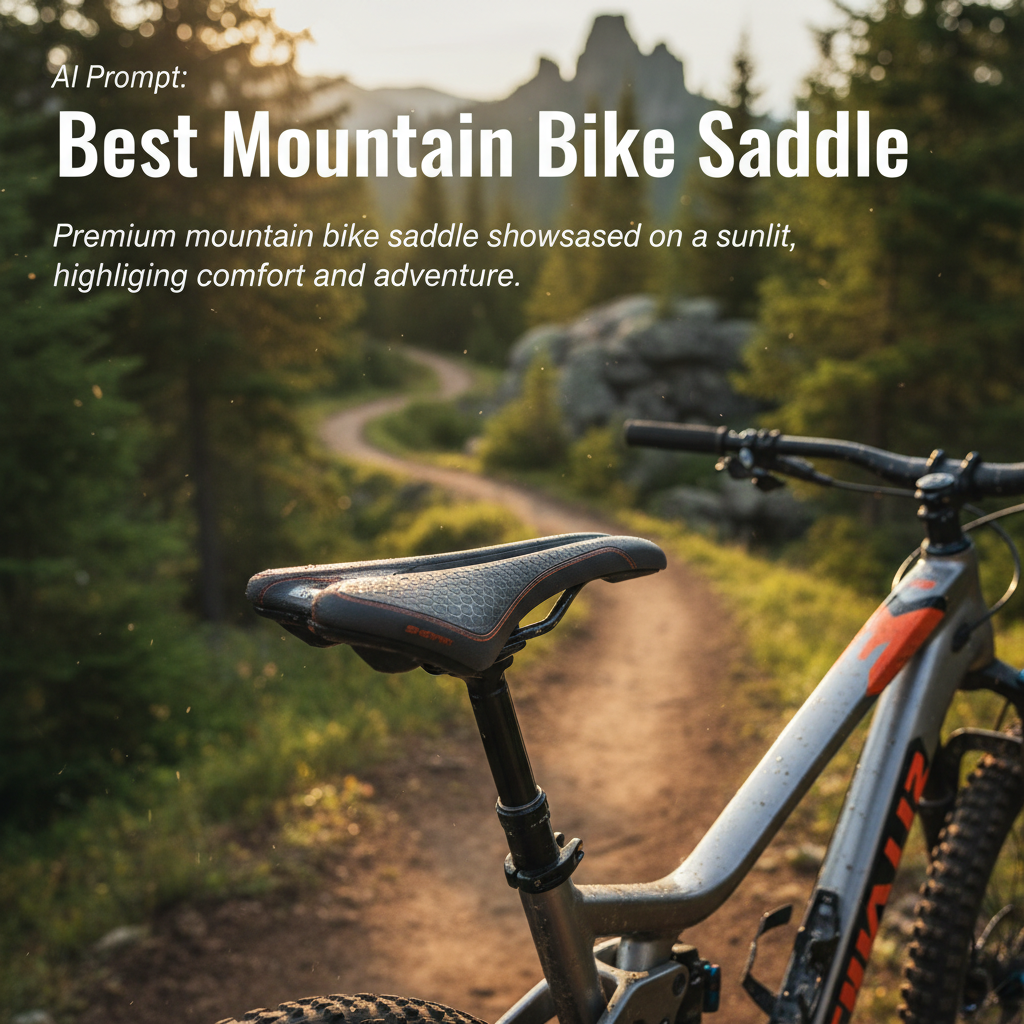
Quick Comparison – 2026’s Top 3 Mountain Bike Saddles
Best Overall: WTB Volt
The WTB Volt continues to set the benchmark for mountain bike saddles in 2026. Its medium-density padding, available widths (142/145/150mm), and versatile performance make it the gold standard for trail, all-mountain, and even gravel use. Testers praise its support and comfort on long rides and climbs, with its “Comfort Zone” cutout offering effective pressure relief.
Best Value for Money: SDG Bel-Air V3
The SDG Bel-Air V3 delivers firm support, a durable seamless microfiber top, and excellent power transfer—all for around $110. It stands out in durability tests, showing minimal wear under aggressive riding and field-abuse simulations. Its fit favors riders who prefer a supportive, slightly firmer perch.
Best for Trail Comfort: Fizik Terra Aidon X5
With high ratings for support on extended rides, the Fizik Terra Aidon X5 (145/160mm widths) blends plush comfort, ergonomic shaping, and durability. It’s especially recommended for broad sit bones and longer distances, offering solid thigh grip and a well-ventilated shell.
| Model | Price | Weight | Widths | Main Advantages | Main Drawbacks |
|---|---|---|---|---|---|
| WTB Volt | $142.95 | 230g | 142/145/150mm | Versatile, comfortable, pressure relief | None major |
| SDG Bel-Air V3 | $110 | 233g | 142mm | Firm support, durable, best value | Firmer, little width choice |
| Fizik Terra Aidon X5 | $125 | 195g | 145/160mm | Comfort for long rides, ergonomic | Slightly slippery cover |
What’s New in Mountain Bike Saddles for 2026?
Innovative Materials & Eco-Friendly Options
Brands like Ergon lead the way with shorter, ergonomic saddles (e.g., new SMS series), using optimized padding, flexible shells, and Kevlar or microfiber-reinforced covers for durability. While carbon composite rails and recycled bases are emerging, most eco-trends focus on long-lasting padding and shell life to reduce waste. TPU (thermoplastic polyurethane) tubes and recyclable foams start to appear among premium models.
Tech Integration: Smart and Connected Saddles
The future is connected. New “smart” saddles are launching with integrated pressure sensors capable of real-time fit analysis. Wireless integration with smart suspension platforms (e.g., SRAM’s Flight Attendant) allows dynamic comfort adjustments. Bluetooth and app-based analytics for pressure mapping are becoming available on higher-end models.
Custom Fitting & 3D-Printed Designs
Custom fitting continues to gain traction, with pressure mapping at bike shops now mainstream. Several brands offer 3D-printed or custom-molded padding tailored to the rider’s sit bone structure and pressure points. This development boosts both comfort and long-term performance across riding categories.
How We Chose the Best Mountain Bike Saddles
Our Testing Process & Expert Panel
Testers from leading publications conducted months-long field tests, riding each saddle for 100+ miles across Western U.S. trails, swapping mid-ride for direct comparisons and using both technical (e.g., Lake Tahoe rock gardens) and endurance (all-day epics) scenarios. Assessments involved multiple testers of varying anatomy and riding style.
Evaluation Criteria: Comfort, Durability, Technology, and More
- Comfort (30%): Assessed via ride feel, pressure distribution, numbness prevention, and support during long rides.
- Performance (20%): Pedaling efficiency, chassis flex, and climbing/descending support.
- Durability (20%): Drag tests, impact resistance, cover integrity, and wear after multiple rides.
- Weight (20%): Direct measurement; balanced versus comfort and durability.
- Versatility (10%): Performance across trail types, weather conditions, and fit personalization systems.
| Metric | Weighting | Evaluation Details |
|---|---|---|
| Comfort | 30% | Support, pressure relief, fit |
| Durability | 20% | Concrete drag & extended field abuse |
| Technology | 20% | Channels, shells, and integrations |
| Weight | 20% | Measured and compared to performance |
| Versatility | 10% | Performance across terrain/riders |
Detailed Reviews – Best Mountain Bike Saddles of 2026
WTB Volt: Pros, Cons & Field Test Results
- Pros: Medium-density padding, pressure-relief cutout, superb versatility, fit improves with use, multiple widths.
- Cons: Slightly heavy at 230g, no reinforced rear corners (caution with crashes).
- Field Test: Praised for offering “no complaints” and “disappearing” under riders on long rides. Strong value and all-terrain comfort. Buy WTB Volt
SDG Bel-Air V3: Pros, Cons & Field Test Results
- Pros: Firm support, all-day ride stability, very durable, minimal wear even after concrete drag tests, best value.
- Cons: Firmer than plush options, may not fit very broad sit bones, only one width option.
- Field Test: Maintained shape and comfort over months of abuse; testers loved the support and performance on climbs.
Fizik Terra Aidon X5: Pros, Cons & Field Test Results
- Pros: Plush support, shell cut-out for pressure relief, ideal for broad sit bones, robust design for technical trails.
- Cons: Cover can be slippery when wet.
- Field Test: Excellent extended comfort; highly recommended for e-MTB and trail marathon riders.
Ergon SM Enduro Men: Pros, Cons & Field Test Results
- Pros: Ergonomically optimized padding, strong pressure relief, climbing tail for stability.
- Cons: Heavier (306g), men-specific sizing only.
- Field Test: Top pick for enduro comfort; cushioned for long descents, praised for pressure relief.
Fizik Terra Alpaca X5: Pros, Cons & Field Test Results
- Pros: Short length for technical movement, comfortable for long rides, flexible base, mid-weight (234g).
- Cons: Slippery shell in muddy conditions, pressure channel could be deeper.
- Field Test: Good for active trail riders seeking a mix of support and maneuverability.
Honorable Mentions: Latest Releases & Rising Brands
- WTB Rocket: Comfortable and robust, built for e-bikes and demanding trail conditions. Compact nose for climbing, tested creak-free after hard abuse.
- SQLab 612 Ergowave: Superlight, ergonomic shape, adapts well for hardtails or long-distance technical riding.
Choosing the Right Mountain Bike Saddle: Buyer’s Guide 2026
Saddle Fit and Anatomy Science: What’s Changed?
Fit remains the top criterion: measure your sit bones (bike shops offer sit bone tools/pressure mapping), and select a saddle 10–20mm wider for optimal support. Newer models add width and length options—e.g., WTB Volt (135/142/150mm), Ergon SM Enduro (135/148mm), SQLab (up to 17cm width).
Comparing Padding, Shape, and Flexibility
- Medium-density padding prevents “sinking” while offering shock absorption.
- Concave and cradled shapes yield better back support, while channels/cutouts relieve pressure on climbs and descents.
- Look for shells or chassis with built-in flex (e.g., Fabric Scoop Elite, Fizik Terra), as these absorb more trail buzz than rigid platforms.
Gender-Specific vs. Unisex Designs
- Women’s models favor wider, shorter tails and deeper center channels for pubic arch relief (e.g., WTB Koda, Ergon SMC Core).
- Unisex and custom-width options (e.g., Fizik Terra, SDG Bel-Air) fit a broader range of anatomies but may need test rides for proof.
Durability, Waterproofing & Long-Term Performance
- Microfiber tops, Kevlar wings, and seamless welds (as in SDG Bel-Air, Fizik Terra) stand up to repeated drops and mud.
- Titanium and chromoly rails resist flex and breakage.
- For wet climates, look for hydrophobic covers and edge sealing.
Expert Insights – Real-World Experiences and Data-Driven Advice
Rider Testimonials: Comfort on Extended Rides
- Testers consistently rank the WTB Pure and Volt as couch-like in comfort, excelling on multi-hour events and stage races.
- Specialized Power Expert: Riders note “all-day comfort” with balanced firmness and short nose.
- Budget users praise the Kutook spring saddle for comfort and value, showing that quality isn’t always expensive.
Pro Tips: Preventing Saddle Soreness in 2026
- Proper fit (width match) is more important than extra padding.
- Cutout channels reduce numbness and soft tissue pressure.
- Shorter or noseless designs improve freedom of movement.
- Surface texture matters: Look for a grip to avoid sliding and chafing on technical climbs.
FAQ: Common Myths About Mountain Bike Saddles
- Myth: More padding means more comfort.
Fact: Excess foam causes sinking and more pressure—supportive, medium-density foam is best. - Myth: One saddle fits all.
Fact: Riders differ in anatomy; pressure mapping and fit are essential. - Myth: Saddles never need changing.
Fact: Anatomy, fitness, and riding style evolve. Periodic refitting is recommended.
Final Recommendations: Find Your Best Mountain Bike Saddle This Year
For most riders, the WTB Volt offers unmatched versatility and comfort. If you need durability and value, the SDG Bel-Air V3 provides firm support and exceptional resilience. For long-trail or marathon comfort, Fizik Terra Aidon X5 stands out with plush ergonomic support. Prioritize fit, not just features—use bike shop pressure mapping and demo rides for a perfect match.
Ready to upgrade your ride? Shop top-rated MTB saddles and elevate your trail experience in 2026.