
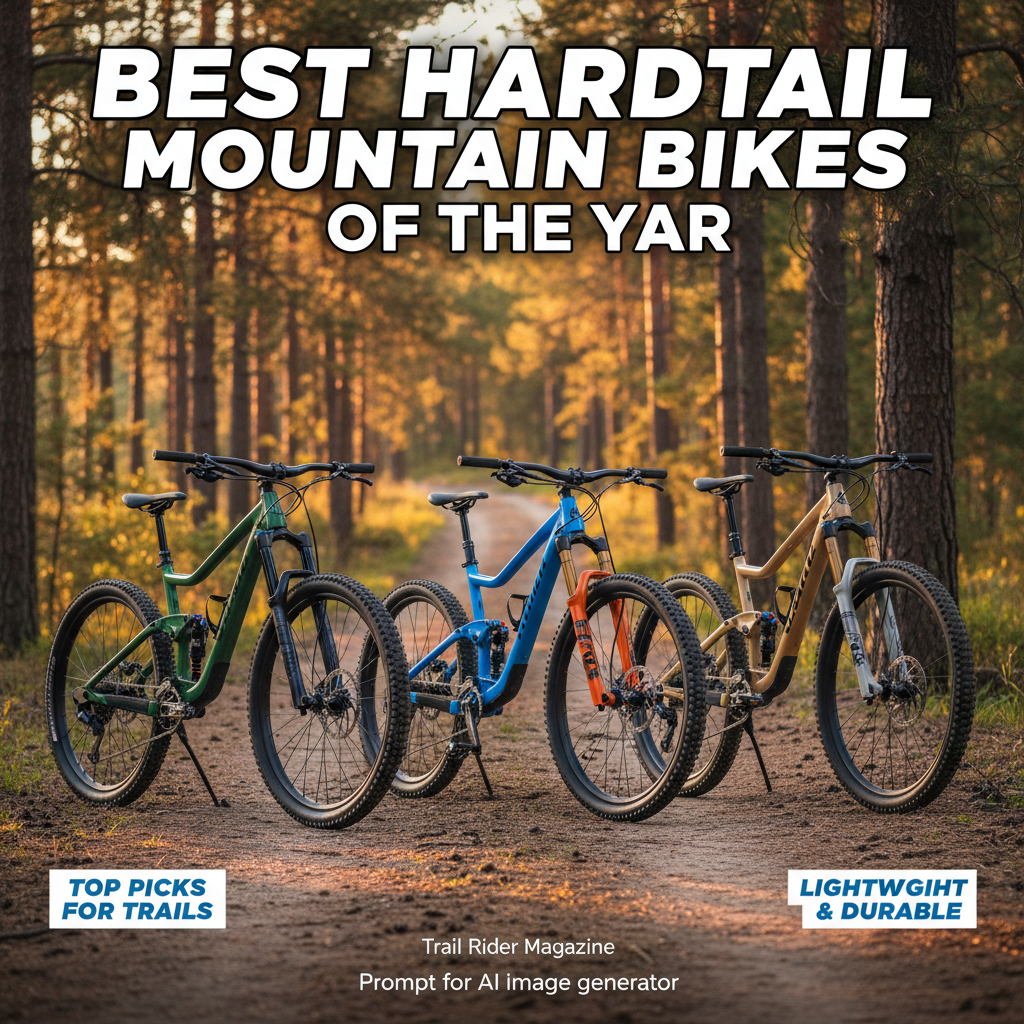
Quick Picks – Top 3 Hardtail Mountain Bikes of 2026
Best Overall Hardtail Mountain Bike
Canyon Grand Canyon – Leading expert and lab tests highlight the Grand Canyon for its superb versatility, low 12.7 kg weight, and highly adaptive features. The 2026 model features 120 mm travel, dropper post, and multiple mounting points perfect for adventure, touring, and aggressive trail riding. Balanced geometry allows both confident descending and efficient climbing. (Source)
Best Value for Budget Shoppers
Rockrider Race 740 – High-value carbon frame hardtail at €1,299 (~$1,400), weighing just 11.4 kg. Rider tests show strong climbing efficiency, smooth 100 mm travel, and upgradeable with a dropper post. Stands out for offering carbon innovation at an entry-level price. (Source)
Best for Trail Versatility
Rose Bonero 3 – At 12.6 kg and €1,699 (~$1,830), this model features 130 mm fork travel and a robust frame. Testers praise its descending confidence, nimble handling, and chunkier trail tires. Suitable for both fast trail sessions and all-day rides. (Source)
How We Chose the Best Hardtail Mountain Bikes
Testing Criteria and Review Process
- Independent lab testing (weight, frame strength, fork performance, geometry)
- Long-term field tests (trail variety, climbing, descending, comfort, durability)
- Rider surveys (handling feedback, upgrade ease, fit for diverse users)
- Expert reviews and group tests from 2026 published data (BikeRadar, Bike-Test.com, MBA)
Results were cross-referenced with current market availability and user-experience data for ownership insights.
What Sets Our Recommendations Apart in 2026
- Focus on bikes with sub-13 kg weights for better climbing and trail agility
- Emphasis on frames with progressive geometry (slacker head angles, longer reach)
- Models offering dropper posts, extensive mounts for bikepacking, and high-quality forks
- Race bikes benchmarked on tested acceleration, sub-10 kg build, and responsive handling
- Consideration of real-world ownership (service costs, upgrade paths, resale strength)
Best Hardtail Mountain Bikes by Category
Best Budget Hardtail Mountain Bikes (Under $1,000)
- Marin Bobcat Trail 5: 120 mm Suntour fork, progressive geometry, capable on climbs, ~13.2 kg, priced at $999
- Polygon Xtrada 6: Efficient Shimano Deore drivetrain, internal routing, and trail-proven wheelset
Best Hardtails for Aggressive Trail Riding
- Rose Bonero 3: 130 mm travel, robust frame, excellent descending capability
- Mason Raw: Steel frame for compliance, trail-optimized geometry, bikepacking compatibility, ~13 kg
Best Lightweight and Race-Ready Hardtails
- Cervelo ZHT-5: Sub-10 kg race machine, standout acceleration and grip, advanced carbon layup
- Orbea Alma M-Ltd: Sub-8 kg possible with rigid fork, ultra-responsive handling for competitive XC
- Trek Procaliber 9.7 AXS Gen 3: Lightweight, agile, progressive XC geometry, ~10 kg
Best Hardtail Mountain Bikes for Women and Diverse Riders
- No major 2026 “women’s-specific” launches, but most modern hardtails adopt inclusive sizing ranges
- Canyon Grand Canyon: Extensive size options and adjustable geometry ideal for a range of rider profiles
- Fairlight Holt (not 2026-specific): All-day comfort, flexible geo, praised in diverse rider tests
Best Hardtails for Commuting & Adventure Touring
- Canyon Grand Canyon: Upright comfort, mounts for racks, fenders, and bottle cages, 120 mm travel for all-terrain commuting, sub-13 kg
- Other options: Bikes with wide tire clearance and dedicated mount points excel for practical urban/adventure flexibility
In-Depth Hardtail Mountain Bike Reviews
Canyon Grand Canyon: Specs, Pros & Cons, Who It’s For
- Specs: 12.7 kg, 120 mm travel, dropper post, multi-mount alloy frame, Shimano Deore or GX transmission
- Pros: Versatile for touring/adventure, efficient climbing and descending, mounts for customization
- Cons: Slightly heavier than top carbon options, not as “snappy” as pure XC bikes
- Best For: Riders seeking all-round utility—adventure, commuting, and occasional trail attacks. Shop here
Rockrider Race 740: Specs, Pros & Cons, Who It’s For
- Specs: 11.4 kg, full carbon frame, 100 mm fork, 1×12 drivetrain, tubeless-ready wheels
- Pros: Outstanding value, lightest in class, competitive for entry-level racers, easy upgrades
- Cons: Basic fork needs upgrading for rugged trails, no dropper post stock
- Best For: Budget-conscious XC racers, riders learning technical trail skills
Rose Bonero 3: Specs, Pros & Cons, Who It’s For
- Specs: 12.6 kg, 130 mm fork, robust aluminum frame, aggressive geometry
- Pros: Supremely stable descending, plow-through confidence, excellent for mixed terrain
- Cons: Not as fast-rolling as pure race bikes, heavier than high-end carbon models
- Best For: Trail shredders, technical riders, bikepackers wanting speed and trick capability
Additional Honorable Mentions
- Marin Bobcat Trail 5: Budget king with progressive geometry and drivetrains suited for starters
- Orbea Alma M-Ltd: Below 8 kg with rigid fork, top-level race acceleration
- Mason Raw: Forgiving steel, big on comfort/trail feel for long-distance or adventure riders
Real-World Rider Experiences & Testimonials
Non-Expert Cyclist Impressions
- Testers new to hardtails praised lighter models (Race 740, Grand Canyon) for their manageable climbing and smooth ride, even over 3-hour sessions
- Entry-level users highlighted upgrade flexibility as key for adapting the bike over time
Testimonials from Niche User Groups (Women, Older Riders, Long-Distance, Commuters)
- Women and shorter riders found inclusive sizing on the Grand Canyon and Bobcat Trail delivered a “one size fits more” feeling, easing fit issues
- Older riders seeking simple maintenance favored hardtails for fewer moving parts and easier regular upkeep
- Commuters and touring cyclists valued mounts for racks and cargo, while appreciating the control of MTB geometry on mixed surfaces
Ownership Experience Beyond the Showroom
Maintenance, Upgrades & Lifecycle Costs
- Hardtails offer lower long-term maintenance—no rear shock or linkage bearings, so typical annual costs run $100–$200 (tune-ups, drivetrain wear)
- Main upgrade paths: dropper post ($150–$300), air fork ($250–$600), and quality tubeless tires ($80–$150)
Sustainability – Eco-Friendly Brands & Materials
- Sustainable manufacturing not widely adopted but growing; aluminum and steel frames are more recyclable than carbon
- Long-lasting models with upgrade potential (like the Grand Canyon and Mason Raw) support sustainability by extending bike lifespan
Resale Value & Longevity in 2026
- Modern hardtails retain strong resale due to simplicity and upgrade paths—average resale holds 55–70% of value over three years for top models
- Robust frames and lack of complex suspension increase usable life, making 2026 models safer long-term investments
Hardtail Mountain Bike Buyer’s Guide (2026)
How to Match a Hardtail Mountain Bike to Your Riding Style
- XC/Marathon: Lightweight (<11 kg), 100 mm travel, carbon or alloy frame, 29" wheels for speed
- Trail/Downcountry: 120–140 mm fork, more aggressive geometry, dropper post, 29″ or 27.5″ wheels
- Commuting/Adventure: Mounts for racks and bottles, upright fit, reliability beats outright weight
Frame Materials, Geometry, and Wheel Size Demystified
- Materials: Alloy = affordable & tough, Carbon = light & stiff (racing), Steel = smooth ride (adventure)
- Geometry: Slacker head angle (65–67°) and steeper seat angle boost stability and climbing prowess in 2026 models
- Wheel Size: 29″ = roll faster, better for tall riders and smoother trails. 27.5″ = playful, easier for jumps, suits shorter/younger riders (details)
Essential Features and Upgrades to Consider
- Dropper post for variable terrain
- 1×12 drivetrain for simplicity and wide gear range
- Air-sprung fork (100–130 mm travel) for adjustability
- Tubeless-ready rims and grippy trail tires
- Mounts for bottle cages, racks, and fenders
Test Riding a Hardtail Mountain Bike – What to Look For
- Fit: Stand-over height, reach, and saddle comfort
- Handling: Predictable steering, confidence in turns
- Fork action: Smooth compression, firm lockout for climbs
- Climbing: Low weight and responsive gearing should feel zippy
- Versatility: Frame mounts and tire clearance for intended accessories
Common Mistakes First-Time Buyers Should Avoid
- Overspending on full-suspension for beginner trails
- Ignoring proper bike fit and geometry match
- Choosing cheap coil forks that are harder to tune or upgrade
- Skipping dropper posts or tubeless conversion
- Selecting the wrong wheel size for rider height/style
FAQ – Choosing the Best Hardtail Mountain Bikes in 2026
Are Hardtail Mountain Bikes Still Relevant in 2026?
Yes, hardtails remain popular for their lighter weight, lower price, and superior efficiency—especially for 80% of riders on less technical trails. Modern geometry and dropper posts boost their relevance for aggressive riding.
Hardtail vs. Full-Suspension: Which Is Better for You?
- Hardtail: Best for lighter weight, lower cost, less maintenance, and skill-building on climbs and rolling terrain
- Full-Suspension: Better for frequent, technical descents; heavier, costlier, and requires more upkeep
- For most recreational and fitness riders, hardtail is the smarter investment unless riding daily on rough, technical trails
How Much Should You Spend on a Hardtail?
- Budget ($800–$1,500): Solid alloy frame, basic air fork, reliable drivetrain
- Mid-range ($1,500–$2,500): Lighter alloy or entry carbon, trail features, dropper post
- Premium ($3,000+): Ultra-light carbon, race-level specs, pro-level performance
Is 27.5” or 29” Better for Trails?
- 29”: Rolls over roots/rocks easier, maintains speed, better for XC and taller riders
- 27.5”: More playful and agile, preferred for jumps or tight turns, suits shorter or youth riders
What Upgrades Matter Most Over Time?
- Dropper post for technical riding
- Air fork for better adjustability and ride quality
- Tubeless tires for fewer flats and better grip
- Quality brake upgrade enhances trail confidence
Final Thoughts and Top Picks for Every Rider
The 2026 hardtail mountain bike landscape rewards riders with lighter, more versatile bikes, high-value options, and improved long-term ownership. For all-around excellence, the Canyon Grand Canyon sets the standard. Budget riders will thrive with the Rockrider Race 740, while trail enthusiasts looking for extra fun and stability should consider the Rose Bonero 3.
Ready to ride? Click through to leading retailers or direct manufacturer links above to check current prices and secure 2026’s top hardtail models before inventory runs out!