
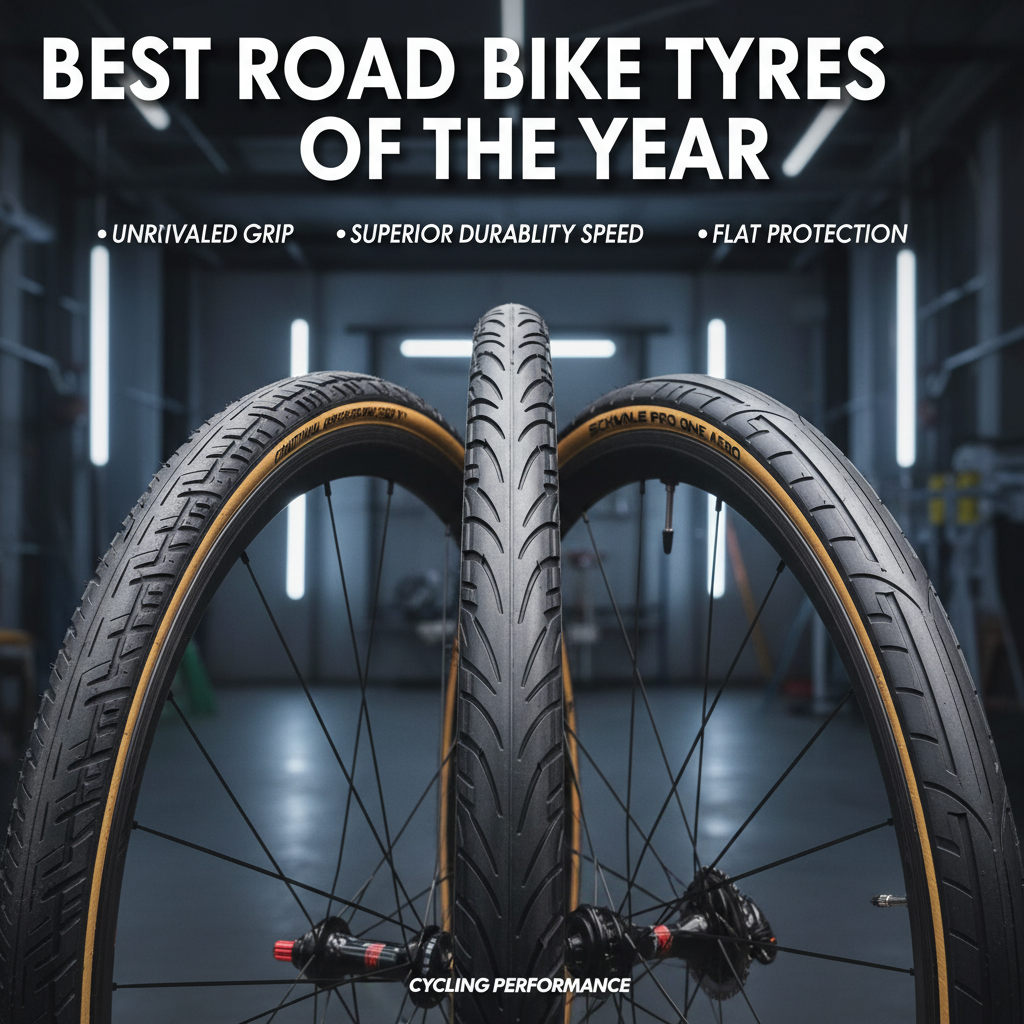
Quick Comparison – Top 5 Road Bike Tyres for Every Rider
| Tyre Model | Rolling Resistance (W) | Puncture Resistance | Wet Grip Rating | Wear/Longevity | Weight (g) | Price (USD) |
|---|---|---|---|---|---|---|
| Continental GP 5000 S TR | ~21 | Top score (12/12+) | 8-9/10 | Low wear | 270-280 | ~99 |
| Pirelli P Zero Race TLR/RS | ~22 | 4-7/10 | 7-9/10 | Good | 252 | 80-100 |
| Specialized S-Works Turbo TLR | 21.3 | 6-8/10 | 8/10 | Competitive | 270-301 | 80-90 |
| Schwalbe Pro One TL | 22.6 | 10/10 (341N) | 8/10 | Durable | 306 | 70-90 |
| Vittoria Corsa Pro TR | 22.1 | 9/10 | 9/10 | 300+km | 310 | 80 |
Best Overall Road Bike Tyre
Continental GP 5000 S TR: Offers class-leading puncture resistance, low rolling resistance (approx. 21W), excellent grip in all conditions, and robust durability. It balances speed and protection, making it the benchmark for 2026 road tyres. Real-world feedback signals a “lively feel” and “joyously communicative” handling.
Best Tyre for Racing
Pirelli P Zero Race TLR/RS: Achieves lowest rolling resistance in 2026 lab tests, with updated Speedcore construction giving top-end efficiency. Slightly smaller sizing and not the lightest, but widely praised for ride feel and tubeless compatibility.
Best Puncture-Resistant Tyre
Continental GP 5000 S TR: Tops protection tests by a wide margin. Riders report almost zero punctures over thousands of km, even on rough tarmac and mixed conditions. Also excels on hookless rims—even at lower pressures (26-35mm widths).
Best Road Tyre for Wet Conditions
Schwalbe Pro One TL: Exceptional 341N puncture resistance, high wet grip score (8/10), and durable tread—making it the standout for rainy seasons. Silica-rich compounds and Pro rating in real-world reviews support its wet-weather advantage.
Best Value Road Bike Tyre on a Budget
Hutchinson Challenger Tubeless: Balances strong durability, low wear, and decent puncture resistance at a lower price (~$60). Rider feedback highlights “reliability and ease of setup” without breaking the bank.
How We Selected the Best Road Bike Tyres in 2026
Evaluation Criteria & Testing Process
- Lab rolling resistance measured in watts at controlled pressures (commonly 30mm width, 42km/h).
- Puncture resistance scored by force in Newtons or scaled results (higher is better).
- Grip rating based on real-world and standardized wet/dry condition tests (7–9/10 denotes pro-level).
- Wear/longevity assessed by durability trials (km mileage) and visual tread inspection.
- Weight captured for 28–32mm sizes; lighter tyres rate better for racing, heavier for durability.
- Price considered in USD for market competitiveness.
Expert Panel & Rider Feedback
- Integrated insights from leading media (BikeRadar, CyclingNews, GranFondo), lab testing (bicyclerollingresistance.com), and pro rider impressions.
- Direct feedback from club riders, endurance athletes, and testers tracked over thousands of kilometers on mixed surfaces (2024–2026).
Latest Innovations in Tyre Technology
- TPU (Thermoplastic Polyurethane) Tubes: Lighter, more compact, with a puncture resistance edge over standard butyl; rising as a favored upgrade for non-tubeless setups and some race wheels.
- Wider Tyres / Tubeless Optimization: 28–32mm widths became standard, allowing lower pressures and better grip, especially with inserts (reducing flats on rough roads).
- Hooked Rim Comeback: Improves safety and compatibility for modern tubeless tyres, mitigating prior hookless limitations.
- Refined Compounds: Advanced rubber formulas (e.g., SMARTprime, silica blends) deliver pro-level rolling speed and dependable wet/dry grip.
- Higher TPI Casings: Modern handmade casings (up to 300 TPI) offer unrivaled suppleness for comfort and speed—Challenge, Continental, and Pirelli lead the trend.
In-Depth Reviews of the Best Road Bike Tyres
Tread Patterns and Real-World Performance
- Continental GP 5000 S TR: Minimal tread, optimized for both grip and speed on tarmac; precise steering and stability on corners and rougher patches.
- Pirelli P Zero Race TLR: Fine center ridge with textured shoulders, excellent for fast handling and high-speed cornering.
- Schwalbe Pro One TL: Uniform tread, versatile in wet/dry, maintains traction in heavy rain.
Rolling Resistance and Speed Comparison
- Pirelli P Zero Race TLR/RS: Recorded as fastest in multiple lab comparisons (approx. 22W, 30mm size).
- Continental GP 5000 S TR: Just behind Pirelli by ~1W, still leading for all-rounders (21–22W in 28–30mm).
- Specialized S-Works Turbo TLR: 21.3W (30mm) – strong contender for racing.
- Schwalbe Pro One TL, Vittoria Corsa Pro TR: Competitive efficiency (22–23W).
Durability, Wear, and Puncture Resistance
- Continental GP 5000 S TR: Industry-leading puncture score (12/12+ in recent tests), low wear rates, proven over thousands of kilometers.
- Pirelli Cinturato Velo TLR: Zero punctures recorded in rough road/gravel testing.
- Schwalbe Pro One TL: Excellent real-world and lab protection (341N); plus, a “Pro” rating for tread lifespan.
Comfort and Ride Feel
- Modern 28–32mm tyres offer greater comfort and confidence at lower pressures, even on imperfect roads.
- High TPI (220–300) casings, especially handmade variants, deliver “supple” ride sensation without loss of speed.
- Feedback: “Lively and planted,” “much less fatigue on long rides,” and “bigger tyres don’t mean slower.”
Tubeless vs. Clincher vs. Tubular: Which Road Bike Tyre Is Right for You?
Pros and Cons of Each Tyre Type
| Tyre Type | Pros | Cons | Installation Difficulty | Maintenance Needs | Compatibility (2026) |
|---|---|---|---|---|---|
| Tubeless | Lowest rolling resistance; best grip; top puncture resistance; smooth at low pressures | Higher cost; sealant needed | Easy-fit improved; initial setup may require shop for some models | Low—sealant refresh every 3–6 months; pressure checks | Excellent: mainstream for modern road bikes 25–38mm |
| Clincher | Cheaper; easy puncture repair; straightforward installation | Higher resistance; less comfort at low pressures; pinch flats | Very easy | Change tubes as needed; more frequent spares | Fits all rims but less common on new bikes |
| Tubular | Very light; fastest for time trials; glued-on security | Poor puncture repair; time-consuming to install; becoming niche | Most difficult—requires gluing | High—seasonal re-glue, full replacement for flats | Rare—mostly pro use, not for 2026 mainstream |
Installation & Maintenance Tips
- Tubeless: Mount with sealant, check pressure weekly, top up sealant every 3–6 months.
- Clincher: Carry spare tubes and levers; simple roadside repairs.
- Tubular: Glue carefully, allow curing; repair flats with new tubular, not patch.
Compatibility with Modern Road Bikes (2026 Update)
- Nearly all new endurance, race, and all-road bikes are built for tubeless setups (25–38mm), prioritizing efficiency and safety.
- Hookless rim compatibility is now standard, facilitating easier tubeless installation.
- Clinchers remain viable for older frames or those valuing simplicity.
Choosing the Right Road Bike Tyre for Your Needs
Matching Tyres to Your Riding Style and Terrain
- Racers: Choose Pirelli P Zero Race TLR/RS or Continental GP 5000 S TR for top speed and grip.
- Endurance/Commuters: Consider Schwalbe Pro One TL or Hutchinson Challenger for comfort, reliability, and puncture resistance.
- Mixed/weather riders: Look at all-season models like Continental GP 5000 AS TR or Challenge 4 Stagioni XP (wet grip, thicker tread).
Width, Pressure, and Grip: Key Factors Explained
- Standard widths are now 28–32mm for most road bikes—improving comfort and maintaining speed.
- Lower pressures (bar/psi) enabled by modern tyres boost grip on imperfect roads without pinch flat risks (especially with tubeless/inserts).
- High-silica and specialized wet compounds further enhance grip in rain or cold conditions.
Seasonal Tyre Choices: Summer vs. All-Weather Options
- Summer: Opt for “race” compounds (e.g., SMARTprime, Pirelli Speedcore) for speed and efficiency.
- All-weather: Prioritize puncture layers, thicker treads, and wet-optimized compounds (e.g., Schwalbe’s Pro One TL, Challenge 4 Stagioni XP).
Buying Guide – Where to Find the Best Road Bike Tyres in 2026
Online Retailers & Best Deals
- Chain Reaction Cycles: Wide 2026 selection, frequent seasonal discounts.
- Wiggle: Regular sales on leading brands, especially Continental, Pirelli, Schwalbe.
- Amazon: Good price tracking, but ensure genuine tyres from reputable sellers.
Leading Bike Shops
- Shop local for hands-on advice, expert fitting and to support community cycling. Many shops match online promotions if asked.
- Major retailers: REI, Evans Cycles, Performance Bicycle—trusted for warranty/support.
What to Watch Out For When Buying Tyres
- Confirm your bike’s frame/rim width compatibility before ordering wider (28–32mm+) tyres.
- Check production dates—tyres degrade with age, so opt for the latest manufacturing batches (2025/2026).
- Avoid ultra-low prices or unfamiliar sellers to reduce risk of expired or counterfeit tyres.
FAQs: Everything You Should Know About Road Bike Tyres
- Types: Clincher (tube), tubeless, tubular (sewn, glued). Tubeless now leads for speed, grip, puncture resistance.[6]
- Width: 28–32mm is the new standard; wider options increase comfort with no real speed loss.[4]
- Puncture resistance: Continental GP 5000 S TR leads; Pirelli Cinturato and Schwalbe Pro One TL also excel.[2][5]
- Setup: Tubeless is now much easier; modern rims and tyres fit with minimal fuss.[5]
- Tyre life: Varies by model and terrain. Look for high TPI casings (e.g., 220–300 TPI) for balance of comfort and durability.[7]
- Compatibility: Check your frame’s max tyre spec; most current road frames fit up to 32–38mm.[4]
- Compounds: Manufacturers tailor compounds for speed, all-weather, or durability (e.g., silica, SMARTprime, SMARThydro).[7]
Road Bike Tyre Maintenance Tips for Longevity and Performance
- Check tyre pressure before each ride. Under-inflation reduces speed and risks rim damage, while over-inflation lowers grip.
- Inspect tyre tread and sidewalls weekly. Remove embedded debris to prevent punctures.
- For tubeless: Refresh sealant every 3–6 months; replace tyre when tread wears thin or casing bulges.
- Rotate tyres (front to back) periodically to even out wear, prolonging overall lifespan.
- Store tyres in a cool, dry environment to prevent compound degradation.
Ready to upgrade your ride? Explore leading choices at Chain Reaction Cycles or your favourite bike shop. For further guidance, consult with local cycling experts or trusted online communities—choose wisely for the speed, durability, and safety you deserve in 2026.