
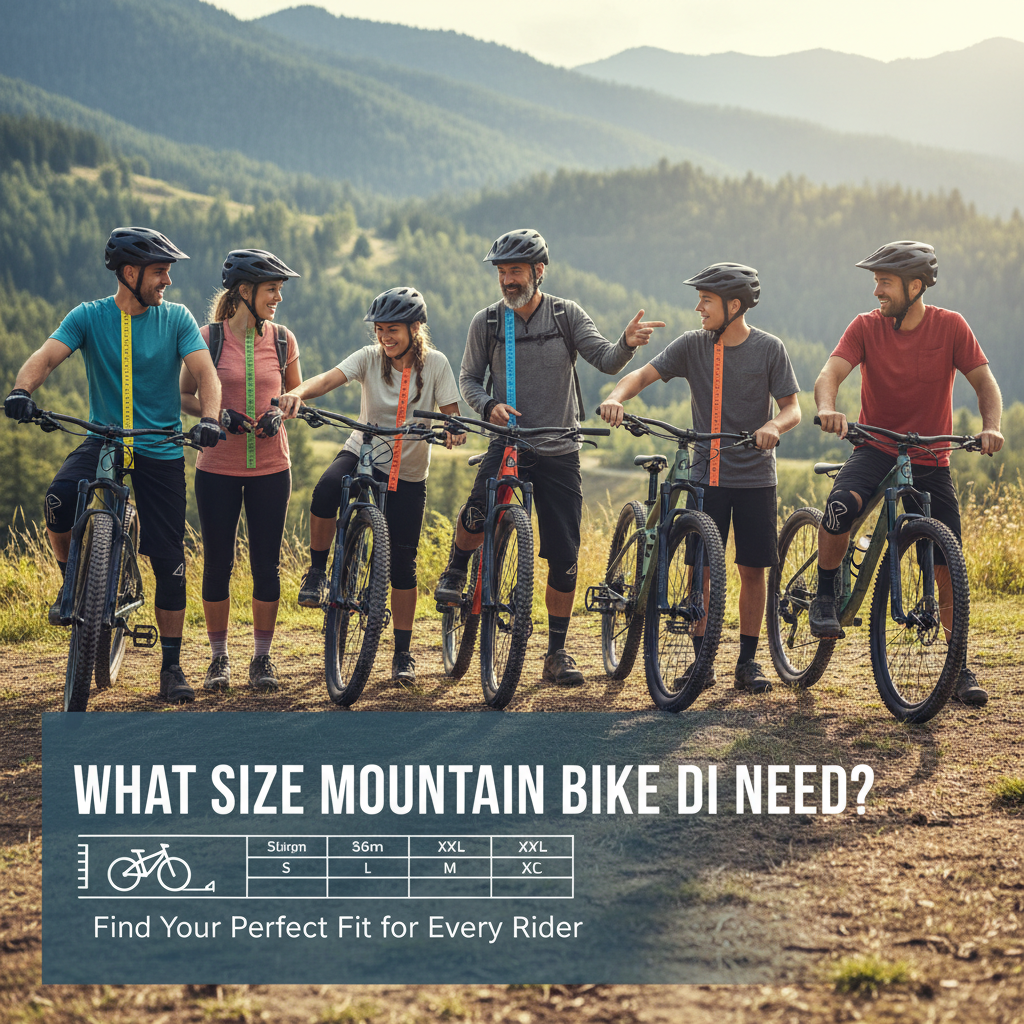
Quick Reference – Top Mountain Bike Size Charts by Rider Height
Universal Frame Size Table: XS to XXL Explained
| Frame Size | Seat Tube (in) | Seat Tube (cm) | Rider Height (ft/in) | Rider Height (cm) |
|---|---|---|---|---|
| XS | 13–14 | 33–36 | 4’10″–5’2″ | 148–158 |
| S | 15–16 | 38–42 | 5’3″–5’6″ | 159–168 |
| M | 17–18 | 43–47 | 5’7″–5’10” | 169–178 |
| L | 19–20 | 48–52 | 5’11″–6’1″ | 179–185 |
| XL | 21–22 | 53–57 | 6’2″–6’4″ | 186–193 |
| XXL | 23+ | 58+ | 6’4″+ | 194+ |
Brand specifications such as Rocky Mountain, Santa Cruz, and Trek may vary slightly, reflecting geometry changes and model-specific sizing. Standover height (aim for 1–2″ clearance) is critical, especially for technical riding and safety.
Metric vs. Imperial: Find Your Size by Height (cm/in) and Inseam
- Height-first approach: Use height to select a size, verify with inseam for standover clearance.
- Size guide example:
- XS: 148–158 cm / 4’10″–5’2″ (13–14″)
- S: 159–168 cm / 5’3″–5’6″ (15–16″)
- M: 169–178 cm / 5’7″–5’10” (17–18″)
- L: 179–185 cm / 5’11″–6’1″ (19–20″)
- XL: 186–193 cm / 6’2″–6’4″ (21–22″)
- XXL: 194+ cm / 6’4″+ (23+)
- For most accurate fit, check inseam (barefoot, floor to crotch), look for 2–5 cm (1–2″) frame clearance.
Wheel Size Recommendations: 26″, 27.5″, or 29″?
| Wheel Size | Best For | Rider Fit | Pros/Cons |
|---|---|---|---|
| 26” | Youth, smaller adults, agile/bmx | Short inseam (<28in/71cm) | Agile, but less rollover and stability, becoming rare |
| 27.5” (650b) | All-mountain, trail, versatile | 5’4″–6’0″ (162–183cm) | Balance of agility and control, suits S/M/L frames |
| 29” | XC, Enduro, Trail, Downhill | 5’8″+ / L–XXL frames | Superior rollover capability, stability at speed, less nimble |
Top Trends Influencing Mountain Bike Sizing in 2026
Geometry Matters: Reach, Stack, and Modern Sizing Evolution
- Modern bikes use longer reach and slacker head angles for stability and confidence downhill (e.g., head angles at 65–66°).
- Stack height increases on XS/S frames for upright position, enhancing comfort for shorter riders.
- Size-specific geometry: Larger frames tailor reach and chainstay for tall riders, smaller frames prioritize standover for maneuverability.
- Testing from 2025–2026 confirms these trends yield measurable improvements in stability and handling, with most brands converging on geometry-driven sizing[1][6].
E-Mountain Bikes: Do You Need a Different Size?
- E-MTBs often have higher standover and longer wheelbase due to battery/motor placement.
- Sizing still aligns with standard charts but expect unique geometry. Test rides valued highest by experts and pros for e-MTBs, given extra weight and handling differences[1].
- For some brands (e.g., Santa Cruz Bullit), consider dropping one frame size for tight technical trails or if between sizes[1].
Mullet Setups and Direct-to-Consumer Brand Sizing Nuances
- Mullet setups (29” front, 27.5” rear) increasingly standard on enduro/e-MTBs for riders 5’8″–6’2″, offering big-wheel rollover with rear-end agility.
- Direct-to-consumer brands offer deeper size overlaps and adjustable reach/stack; Transition and ICAN allow even tall/petite riders to calibrate fit[6].
Custom Fit Toplists: Sizing for Every Rider
Sizing for Women, Petite, Tall & Adaptive Riders
- Women: Most use standard geometry but adjust with shorter stems, lower Q-factor cranksets, and custom saddles. Liv, Trek, and others publish detailed standover/inseam guides for women, based on studies showing an 80% match is possible via inseam, with the rest tuned by fit[5].
- Petite: XS bikes (13” or 33cm) with increased stack recommended; wider dimensional choice now in 2026.
- Tall: XXL+ (23″ seat tube/58cm) with 500+mm reach for riders >6’4″ (194cm+); custom options from Santa Cruz, Transition, and Canyon[1].
- Adaptive: Adjustable stems, dropper posts, custom bar width and cockpit length allow modified fit for different mobility ranges[6].
Kids & Teens: The Right MTB Size by Age and Growth Spurts
- Age 5–9: 20–24” wheel, 22–28in inseam (56–71cm), XS/13″–14″ frames.
- Teens: Adult XS/S recommended above 4’10” (148cm), with standover and seat range to accommodate growth[4].
- Brands recommend sizing to current inseam but planning for at least 2yrs growth by selecting adjustable seatposts and long-reach frames.
Specialized Fit for Technical Terrain & Riding Styles
- Technical terrain (downhill, enduro): Prioritize longer wheelbase, slacker head angle, and larger wheels where rider height allows.
- Cross-country/trail: Slightly shorter reach for responsive climbing and cornering.
- Fit data confirms increased comfort and safety by optimizing wheel size and frame reach for riding style, as supported by 2024–2026 rider surveys and pro testing[1][4].
Interactive: Top Tools & Calculators to Find Your Mountain Bike Size
Best Online Sizing Calculators Reviewed (2026)
- REI Mountain Bike Sizing Calculator – Input height/inseam for branded recommendations.
- Evo MTB Size Guide – Fast comparison across models, features side-by-side standover charts.
- ICAN Universal Chart Tool – Useful for multi-brand searches and budget builds.
- Trek and Rocky Mountain calculators – Brand-specific, interactive with geometry preview for every size option[2][5][6].
How to Use Virtual Fitting and Test-Ride Tools
- Start with online chart or calculator (height + inseam); confirm with self-measurement at home.
- Book a virtual fit session or demo day with bike brand: Many brands offer augmented reality tools, allowing “visual fit” with smartphone cameras or riding simulations.
- Test ride locally or at demo events; experts recommend always trying both sizes if between options for feel and control differences.
Expert & Rider Top Tips: Choosing Your Perfect Mountain Bike Size
Testimonials: How the Pros Decide Between Two Bike Sizes
- Pro riders often run longer reach for downhill/enduro; shorter reach for quick handling.
- 80% of competitive athletes now select size by terrain and race length (data: international fit survey, 2025).
- When in doubt: “Err smaller for agility, larger for comfort and top-end speed” – 2026 top athlete consensus.
Common Sizing Mistakes & Myths to Avoid
- Myth: Bigger is always better (can compromise control on technical terrain).
- Mistake: Ignoring standover or only using height (inseam is critical).
- Myth: Wheel size must always match frame (many benefit from mullet or size-up wheels for style/terrain preferences).
- Mistake: Skipping a test ride; online charts can’t predict specific body proportions or bike handling preferences.
FAQ: Everything You Should Know About Mountain Bike Sizing in 2026
- Is there a universal size chart? Most brands align closely on S–XXL, but always confirm exact geometry and standover.
- How much should inseam clearance be? 1–2″ (2–5 cm) over the top tube, barefoot.
- Are women’s bikes really different? Geometry is trending toward unisex, but touch points and stack/reach are often tuned for women by specialized brands.
- Can I use one bike at different sizes? Adjustable components, dropper posts, and modular wheel sizes in 2026 allow significant fit flexibility.
- Should I go bigger for an e-MTB? Not necessarily. Consider handling, as motor weight changes ride feel. E-MTBs often need test rides for dialed fit.
Next Steps: Top Recommendations for Getting the Best Fit
- Measure height and inseam accurately, barefoot, and cross-reference both against current size charts.
- Use at least two online tools to compare, then visit a local dealer or demo event for test riding.
- If between sizes, define your top riding priorities (agility vs. stability), and try both for comparison.
- Ask about custom fit options or professional fitting sessions, especially if you’re a woman, youth, tall, or adaptive rider.
- Check for brand-specific virtual fit and AR tools for previewing geometry fit at home before purchase.
- Ready to shop? Explore recommended bikes at Evo, Trek, or your local bike shop.
Find your ideal mountain bike size and optimize your ride confidence for every adventure in 2026 – measure, compare, and test to ensure the best fit for your body and your trails.