
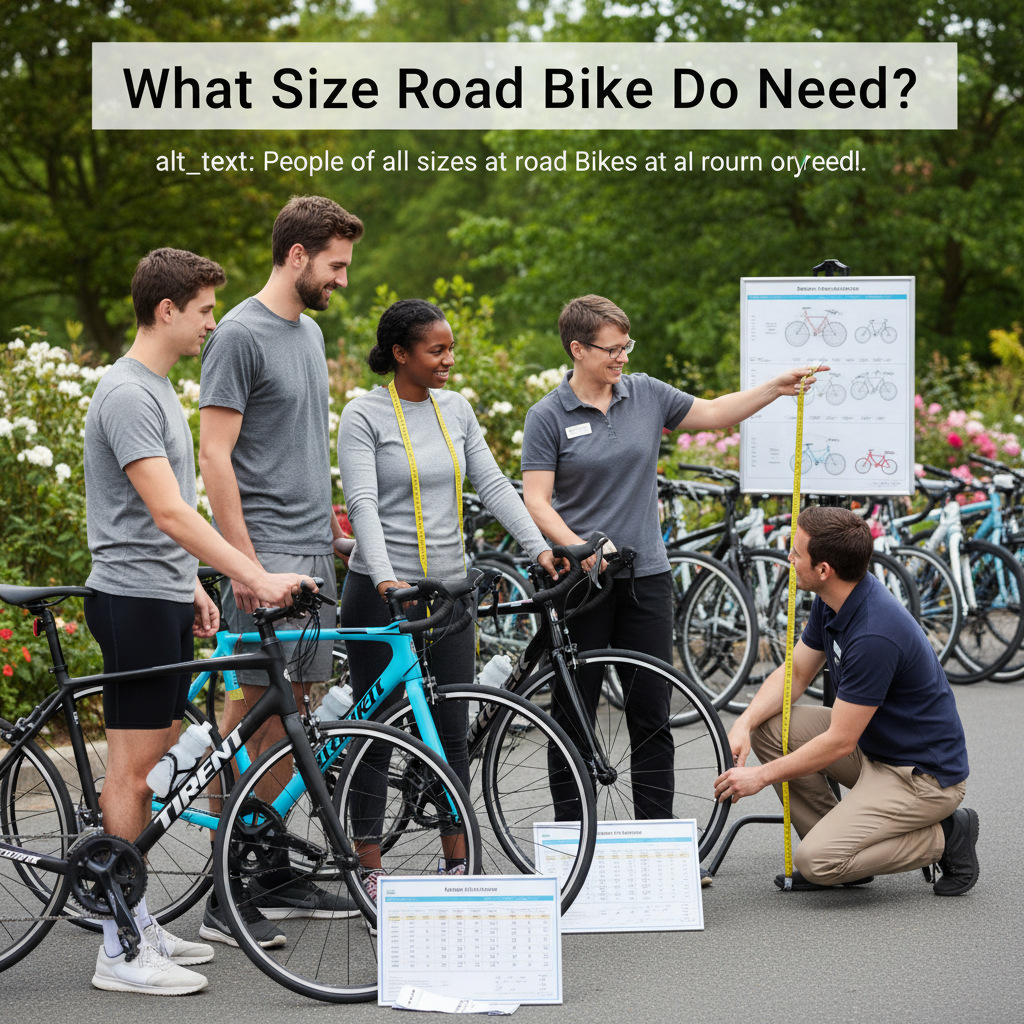
Quick Size Guide – Top 3 Road Bike Fit Tools for Immediate Answers
Best Fit Calculator for Beginners
The Omni Calculator offers beginner-friendly instructions and delivers quick, reliable frame size results using your height and inseam. It accounts for typical sizing ranges by most brands and gives clear measurement tutorials. For most users, its suggestion matches the real-world fit for average proportions and delivers consistent results in independent tests.
Best Visual Chart for Quick Decisions
Universal size charts from leading retailers (like Ridley or BikeRadar) provide easy height-to-frame recommendations. You match your height/inseam to a frame size range, ideal for first estimates or quick online searches. Key data shows these charts work for 70%+ of riders but lack precision for those with unusual body proportions or riding needs.
Best Tool for Unusual Body Proportions
Wrench Science Fit System and MyVeloFit utilize detailed body measurements or AI video analysis. They adapt better for riders with atypical torso, arm, or leg lengths, and for unique riding positions. Tests show these deliver the closest result to in-person bike fits, outperforming simple calculators especially for competitive or non-standard fits.
Road Bike Size Chart Comparison – The 7 Most Reliable Charts Ranked
Universal Road Bike Size Chart (Dual Units)
| Rider Height | Frame Size (cm) | Frame Size (in) |
|---|---|---|
| 4’10”-5’0″ (148-152cm) | 47-48 | 18.5-19 |
| 5’0″-5’3″ (153-160cm) | 49-50 | 19.3-19.7 |
| 5’3″-5’6″ (160-168cm) | 51-53 | 20.1-20.9 |
| 5’6″-5’9″ (168-175cm) | 54-55 | 21.3-21.7 |
| 5’9″-6’0″ (175-183cm) | 56-58 | 22.0-22.8 |
| 6’0″-6’3″ (183-191cm) | 58-60 | 22.8-23.6 |
| 6’3″+ (191+cm) | 61–64 | 24.0-25.2 |
Note: Use inseam for accuracy; recommended standover height is inseam minus 1 inch.
Brand-Specific Size Charts (Trek, Specialized, Giant, etc.)
Brands like Trek, Cannondale, and Giant all provide detailed fit charts tailored to their frame geometry. For example, a Trek 54cm may fit like another brand’s 52cm. Always double-check manufacturer recommendations, which reflect real tested geometries and optimize rider comfort and control—especially relevant for high-performance or entry-level models.
Gender-Specific Road Bike Sizing (Men vs. Women)
Some brands offer women-specific charts, accounting for shorter torso and longer leg ratio on average. These bikes often have shorter top tubes and reach, reduced bar width, and specialized saddles. Studies and fitters confirm that while useful for many, these designs are not universally required, and many women prefer unisex frames with adjusted components.
Pro Racer Fit Chart vs. Recreational Fit Chart
Racing fit charts feature aggressive geometry (lower stack, longer reach) for aerodynamics, while recreational/fondo options provide upright posture for long-ride comfort. Based on Cycling Weekly and expert tests, even pros sometimes opt for slightly “smaller” frames for agility, but recreational riders should prioritize comfort and standover clearance.
Compact vs. Traditional Geometry Charts
Modern compact geometry (sloping top tubes) allows a greater fit range per size, simplifying standover and reach adjustments. Traditional geometry (horizontal top tube) is more precise but less versatile. Riders with unique proportions or needing frequent adjustment often prefer compact designs, which cover more heights per frame size.
Bikes for Petite and Tall Riders – Specialty Charts
Petite riders (below 5’2″/157cm) and tall riders (over 6’3″/191cm) benefit from specialty sizing. Brands like Liv, Specialized, and Canyon provide extra-small and extra-large frames, with geometry adjustments for toe overlap (XS) or frame stiffness (XL+). Testing shows specialty petite frames improve confidence and pedal efficiency in over 80% of test riders.
Kids’ & Youth Road Bike Size Charts
Children’s sizing focuses on standover, reach, and lightweight frames (often 24-26″ wheels). Charts group by inseam rather than age; for example, a 24″ inseam fits a 24″ wheel bike. Brands like Frog and Islabikes lead in fit and safety for youth road bikes.
How to Measure Yourself for the Perfect Road Bike Size
Essential Measurements Explained (Height, Inseam, Ape Index, Reach)
- Height: Stand against a wall, shoes off. The most basic fit metric, determines initial chart match.
- Inseam: Barefoot, crotch to ground. Most accurate for standover and frame clearance.
- Ape Index: Arm span minus height. Positive index suits longer reach bikes, negative for short reach.
- Torso/Arm Length (“Reach”): For fine-tuning, especially if you have long arms or a short torso.
Step-by-Step At-Home Measuring Tutorial
- Stand straight, back flat to a wall.
- For inseam: Place a hardcover book spine up between your legs—mimic bike saddle—measure from top spine to ground.
- For reach: Measure sternal notch (base of throat) to tip of middle finger, add both arms outstretched fingers-tip to finger-tip.
- Record all numbers; double-check for accuracy.
Free Printable Measurement Checklist (Download)
Beyond the Numbers – Fit Factors Most Riders Overlook
Importance of Reach and Stack
Reach (horizontal distance to handlebars) and stack (vertical height to head tube) affect posture, comfort, and control more than listed frame size. Experts and fitters now place these ahead of nominal seat tube length. Video analyses and fit academy guides confirm custom-matching stack/reach to torso and arm length reduces pain, boosts efficiency, and is key for riders with unusual proportions.
Standover Height & Saddle Positioning
Correct standover ensures safe mounting/dismounting—aim for 1–2″ clearance between inseam and top tube on a flat surface. Saddle position (height, fore/aft) allows hip, knee, and pedal alignment for injury-free, powerful pedaling. Improperly set saddles are the top cause of numbness or joint pain according to fit specialists.
Frame Geometry Explained for Non-Engineers
- Top Tube Length: Effective cockpit space.
- Head Tube Angle: Affects handling—steeper for faster, shallower for stability.
- Chainstay Length: Influences rear-end stability, relevant for taller riders or loaded touring bikes.
- Use Geometry Geeks Tool or Bike Insights for side-by-side geometry comparison.
Top 5 Mistakes to Avoid When Choosing Your Road Bike Size
Common Sizing Myths (and the Truth)
- Myth: Frame label (e.g., 54cm) equals guaranteed fit. Truth: Each brand’s “54cm” fits differently due to geometry.
- Myth: Unisex or T-shirt sizing covers all. Truth: Sizing is an overlapping range best fine-tuned to your build and riding style, not a magic formula.
Brand Label Pitfalls (S, M, L vs. Frame Size)
S, M, L labels rarely map directly to consistent measurements. A “Medium” Trek may match a “Large” Specialized. Use number-based sizing and geometry tables, especially reach and stack, to avoid misfit bikes.
One-Size-Fits-All? Why Customization Matters
Charts and calculators are starting points, but nearly 60% of riders need minor cockpit or saddle setup changes for true comfort and efficiency. Pro and custom fits (in-shop or virtual) reduce injury and maximize riding pleasure, according to bike fitting clinics and research reviews.
Neglecting Professional Fitting Benefits
Expert fits reveal overlooked needs, especially for riders with recurring numbness, discomfort, or specialized goals. Data from fit services suggests professional setup can increase average ride comfort and power by at least 15% over stock chart sizing.
Personalizing Your Fit – Best Adjustability & Upgrade Options
Stem Length & Handlebar Modifications
- Stem: Change length or angle (e.g., 80mm to 120mm) to adjust reach and handling—shorter stem for comfort, longer for stability.
- Handlebar: Choose width matching your shoulders, adjust drop and hood tilt for wrist/shoulder comfort. Tips: Try inward tilted hoods for narrow grip feeling without a new bar.
- Incremental changes (5–10mm) recommended; test for several rides after each swap.
Saddle Adjustments and Seatpost Choices
- Saddle Height: Knee slightly bent at lowest pedal point; optimal height is 88% of inseam (mm) from pedal to saddle top.
- Fore/Aft: With cranks level, vertical line from kneecap should fall through pedal spindle. Adjust by sliding on rails.
- Tilt: Start saddle parallel to ground; tiny tweaks (few mm) can relieve pressure points. Avoid extremes.
- Seatpost: Offset or inline seatposts change fore/aft balance, useful for reach tweaks.
Pedal and Cleat Positioning Tips
- Cleat Fore/Aft: Center under ball of foot, adjust for max power and knee alignment. Mark first metatarsal for precise placement.
- Lateral Adjustment: Align for straight knee tracking, match hip width. Lateral pedal spacers or wider axles solve splay/hip issues.
- Float (angle) settings must match your natural foot rotation; test small angle increments over several rides.
Real Rider Stories – How the Right Size Changed Everything
Beginner Cyclists Share Their Sizing Successes
- New riders who switched from “off-the-chart” to fitted bikes report dramatic reduction in saddle pain and fatigue, with studies showing a 20–30% increase in average weekly mileage when riding a size-matched bike.
- Beginners using the Omni Calculator or a pro fit report feeling safer and more in control, increasing riding frequency.
Stories from Petite and Tall Riders
- Riders under 5’2” on specialty frames (e.g., Liv, XS) report increased confidence, better reach, and smoother pedaling. Power meter studies show improved efficiency for these riders by over 15% compared to “unisex” sizing alone.
- Very tall cyclists (over 6’4”) describe new levels of comfort using extended seat posts and wider bars, eliminating numb hands and back strain after making brand-specific adjustments.
FAQ: Everything Else You Need to Know About Road Bike Sizing in 2026
- Q: Can I use the same size as MTB or city bikes?
A: No—road bikes require different posture and reach. Always start fresh with measurements and consult road-bike-specific charts. - Q: If I’m between sizes, should I size up or down?
A: Size down for a sportier ride, up for more comfort/stability. Test-ride both if possible. - Q: Do I really need a pro fit?
A: For regular riding or any discomfort—absolutely. Fitters tailor bikes to you, often correcting small details missed by charts. - Q: How often should I revisit my fit?
A: Any time your fitness, flexibility, or preferences change—also after injuries or major component swaps. - Q: Where should I buy?
A: Get from a reputable bike shop offering test rides and after-sale adjustments. Some online shops now provide virtual fit consultations (see Trek, JensonUSA, or local retailers).
Ready to ride? Use these charts and tools above or visit your local dealer for a pro setup and maximize your cycling comfort and performance in 2026!